
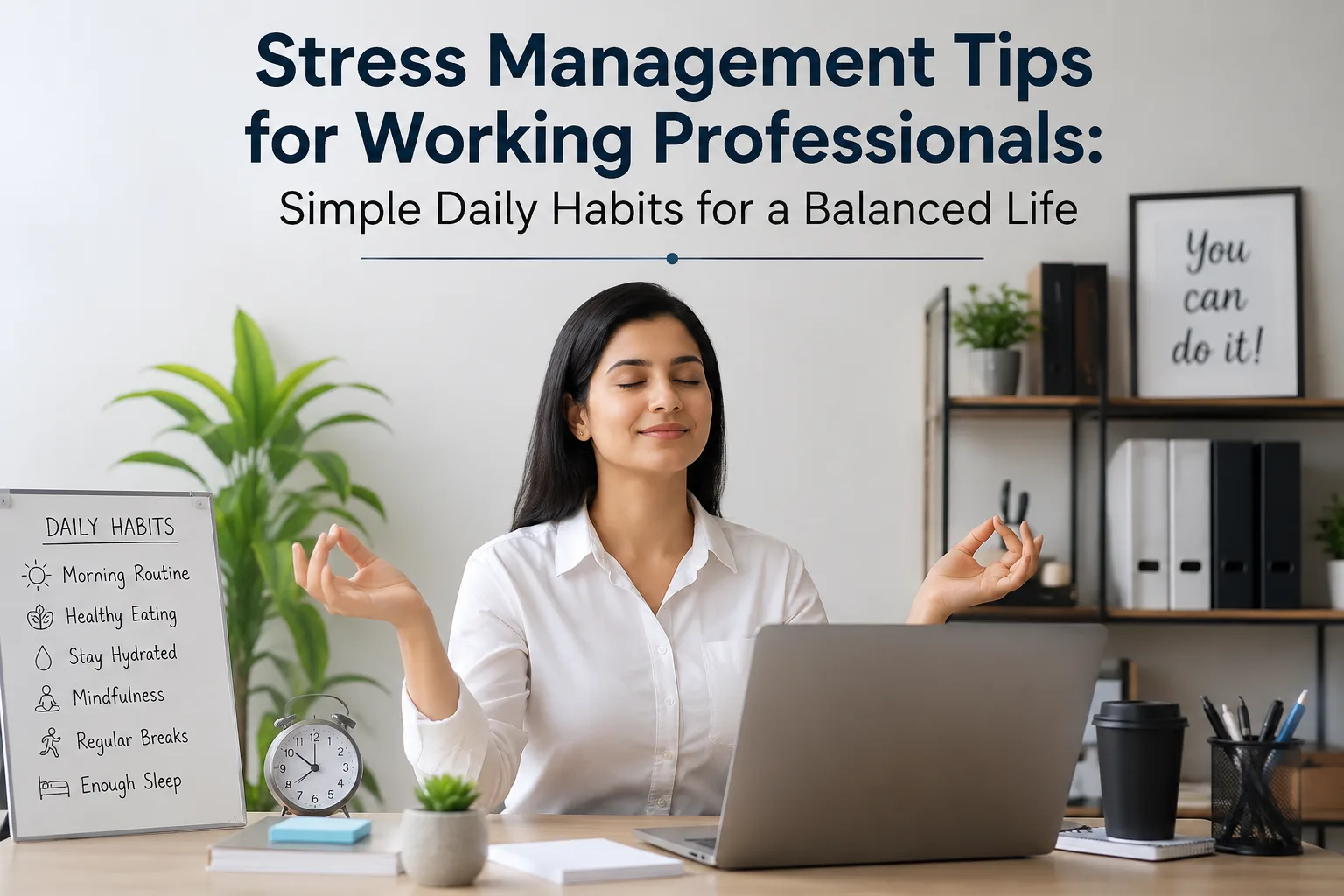
Work stress doesn’t arrive suddenly. It builds up slowly. Long hours. Deadlines that never really end. Messages that keep coming, even after work. At first, it feels normal. You get used to it.
Then one day, sleep is messed up. You can’t focus properly. You feel tired even after resting. That’s usually the moment it hits you. This stress did not start today. It’s there and just hanging in your subconscious mind. You do not always check it, but you feel it.
So when people look up stress management tips, they’re not after big advice or life lessons. They simply want something easy to work.
They are just tired. They want to get through the workday without feeling completely drained. Small changes. Simple things. Something that fits into their routine, not something that asks them to turn their whole life upside down.
12 Best Stress Management Tips that You Can Implement During Real Workdays
Let’s go with these points:
1. Start Your Day Without Work Notifications
One of the biggest causes of workplace stress is starting the day in a panic mode. Checking emails and messages immediately pushes your brain into work stress before the day even begins.
Give yourself the first 15–20 minutes without using screens. This small habit supports mindfulness for stress management for professionals. When your mornings feel really calm, the office stress is easier to manage later in the day.
2. Reduce Stress at Work by Planning Less, not more
Overloaded to-do lists increase job stress management issues. If you do too many tasks, it creates pressure and lessens productivity. Also, if you try to do everything in one day, it doesn’t work. It just makes your head heavy.
You choose only the most important task and leave the rest. Time management for stress reduction is simply about deciding what is not important. Once you do that, work feels more manageable, and you stop feeling tired for no reason.
3. Take Short Breaks to Prevent Chronic Workplace Stress
Ignoring breaks is one of the early signs of job stress. Sitting for hours without moving builds physical and mental stress.
When you sit and work without stopping, stress just keeps sitting there with you. You don’t notice it at first. You’re busy. You’re focused. But it keeps adding up. Stepping away for a few minutes helps more than you expect. You come back a little lighter. The work feels less heavy. That’s it.
4. Do Not Treat Every Task as Urgent
A lot of work stress and mental health comes from this one feeling—that everything is urgent. Every mail. Every message. Every task. Your brain never gets a break. But to be honest, many things can wait. You do not have to handle everything right away.
When you stop for a second and decide what really you have to do and finish. It feels lighter. The rush in your head slows down. The pressure eases. You feel less anxious. Work stops following you in your head all the time.
5. Use Simple Movement as Exercise For Stress Relief
Managing stress at workplaces is incomplete without physical activity. When you sit for long hours, stress doesn’t just stay in your head. It settles in your body too. Tight shoulders. Heavy legs. That constant tired feeling.
You don’t need a daily workout to fix stress. You can just do a short walk, a few stretches, take stairs to help more than you think. These small body movements release tension. It helps you sleep better, and stop burnout from creeping in slowly.
6. Keep One Daily Habit Only For Yourself
When life revolves only around work, professional stress management becomes difficult. Self-care for stress management does not have to be special. It’s not routines or big plans.
If you read a few pages, listen to music, cook something, or just sit quietly for a bit is really enough. These small moments help you reduce stress of work and remember that your whole life is not just your job.
7. Say no to Protect Your Mental Space
Always saying yes increases employee stress management problems. Without boundaries, work-related stress keeps growing.
Saying no or asking for time is a workplace stress management method that protects one’s energy. This habit supports the management of burnout at work and reduces stress and anxiety over time.
8. Clear Your Mind Before Sleep
Your sleep generally gets disturbed when the office stress increases. You go to bed really tired. But when you try to sleep, everything you have done in the office would replay like a movie.
Half-done work. Small mistakes. Tomorrow’s tasks. You keep turning, even though your body wants rest. When you write the journal of the day, it really gives you relaxation techniques for stress. It is one of the Top stress management tips.
9. Eat One Meal Without Multitasking
When you eat during work, you do not really eat. You’re still thinking about work. Still replying. Still tense. The meal ends, but the stress doesn’t. The body never fully relaxes.
Mindful eating supports stress management techniques for employees naturally. This habit helps minimize your stress at work. Also, it improves your focus without adding effort.
10. Share Stress With the Right Person, Not Everyone
Venting without support can increase work anxiety. Choose one trusted person to talk to.
This habit is part of professional stress management and emotional balance. Feeling heard reduces stress at the workplace more than advice ever does.
11. Turn Off Work Notifications After a Fixed Time
Constant alerts keep the brain in work mode and worsen work-related stress.
Setting notification boundaries is one of the simplest stress management strategies for employees. It helps prevent workplace burnout and supports mental health support for employees.
12. Accept Low-Energy Days Instead of Fighting them
Low energy does not mean low ability. Fighting it increases work stress management problems. Acceptance helps in coping with workplace stress and prevents burnout from becoming chronic.
A cluttered desk adds mental noise and affects stress at the workplace. Cleaning small areas supports stress relief techniques by creating visual calm. External order helps internal balance.
Conclusion
Work stress does not mean you are weak or doing something really wrong. That’s just an office task now. This pressure everyone feels in their office and if no one says it out loud they feel it.
And no, if you feel mentally drained, it does not mean you need therapy or counseling. It is best you can start by changing a few small things in your day and see the chances in 21 days. You have to just try one of these stress management tips. See how it feels. Slowly, work stops weighing so heavy on your mind.