
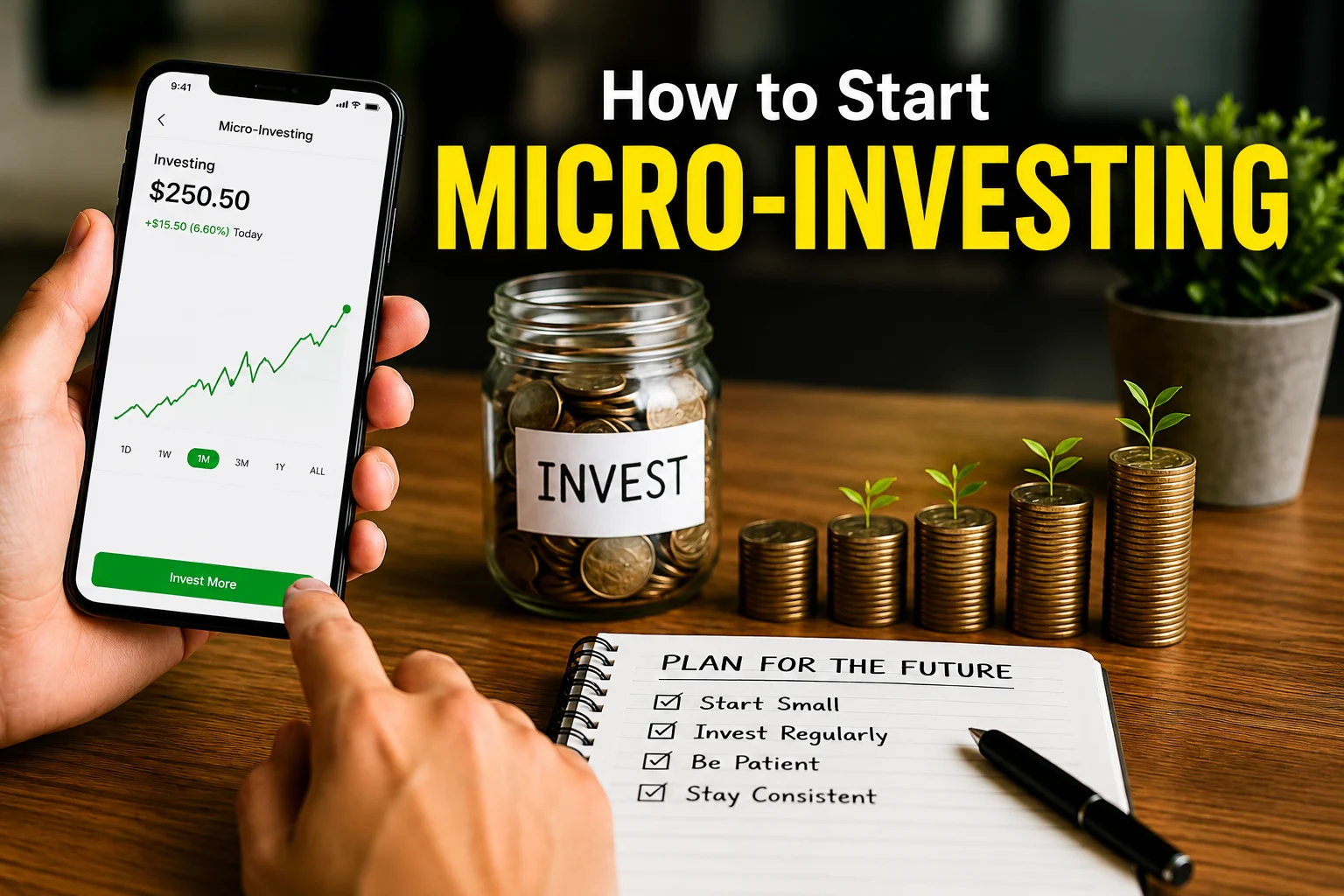
According to a 2023 survey by Bankrate, nearly 57% of Americans say they feel behind on retirement savings, many of them simply because they never started. The truth is simple. You do not need a lot of money to start building wealth. What you really need is to be consistent, patient, and have a system that actually works. That is why micro-investing has become popular in the US over the past few years.
It is a way to invest small amounts of money. It has become very popular. It removes the biggest barrier beginners face, the fear of starting with too little money.
If you have ever thought:
- “I do not earn enough to invest.”
- “I will start later when I have more money.”
- “Investing feels complicated.”
Then this guide is for you. This guide for people who’re new to investing will tell you about micro-investing.
What Is Micro Investing?
Micro investing is the process of investing very small amounts of money regularly instead of waiting until you have a large lump sum.
In simple words, you invest whatever you can afford consistently.
That Could Be:
- $5 a day
- $20 a week
- spare change from purchases
- or a small monthly contribution
The goal is not quick profit.
The goal is long-term wealth building through discipline and compounding.
Many beginners assume investing only matters when large amounts are involved. But the biggest advantage in investing is usually not the amount you start with. It is the amount of time you stay invested.
Why Micro-Investing Is Growing Fast in the USA?
A few years ago, investing felt intimidating for regular people.
Traditional investing often required:
- higher account minimums
- brokerage knowledge
- complicated research
- and the confidence that many beginners did not have
These apps changed that experience completely.
Now people can:
- start with almost no money
- automate investments
- invest from their phones
- and learn gradually while building habits
This shift made investing feel accessible instead of exclusive. And honestly, that accessibility matters more than most financial experts admit. Because financial growth usually starts with behavior before strategy.
My Honest Observation About Beginner Investors
One thing I have noticed repeatedly is this: Most beginners delay investing because they believe they need the “perfect moment.” But that moment rarely comes.
There is always:
- another bill
- another expense
- another reason to postpone
Meanwhile, years quietly pass.
I have seen people spend months researching investments while never actually investing a single dollar. At the same time, someone else investing small amounts consistently builds momentum and confidence over time. That difference becomes huge after a few years.
How to Start Micro-Investing?
If you are completely new, do not overcomplicate the process. Here is a practical way to begin.
1. Define Why You Are Investing
Before choosing micro-investing platforms, understand your reason.
Are you investing in:
- retirement
- financial independence
- future security
- a home
- Or simply to develop better money habits?
Without purpose, most people quit during market fluctuations. Your goal creates emotional stability when the market feels uncertain.
2. Start With an Amount That Feels Comfortable
One of the biggest mistakes beginners make is starting aggressively. Then life happens. And they stop investing completely. A smarter approach is starting with an amount you can realistically continue every month without stress. Even $25 weekly matters. Consistency beats intensity in investing. Always.
3. Choose Reliable Micro Investing Apps
The app you choose matters because it affects your overall investing experience. Good micro-investing apps usually offer:
- automatic investing
- low fees
- beginner-friendly dashboards
- diversified portfolios
- educational resources
Some popular micro-investing platforms in the USA include:
| Platform | Best For | Key Feature |
|---|---|---|
| Acorns | Complete Beginners | Automatic Round-up Investing |
| Robinhood | Self-Directed Investing | Easy Stock and ETF Access |
| Stash | Learning While Investing | Educational Approach |
| Betterment | Passive Investors | Automated Portfolio Management |
| Public | Community-Driven Investing | Social Investing Features |
Every platform has a different style. The best option depends on your personality and comfort level. If you prefer simplicity, automated investing platforms usually work better than constantly managing stocks manually.
4. Understand What You Are Investing In
This part is critical. Many beginners invest blindly because an influencer or friend recommended something. That is dangerous. You do not need to become a financial analyst, but you should understand basic investment categories like:
- ETFs
- index funds
- stocks
- bonds
For most beginners, diversified index funds are usually safer than chasing individual trending stocks. Why? Because they spread risk across multiple companies instead of relying on one business. That stability becomes important for long-term wealth building.
The Real Power of Small Investments
At first, micro-investing feels slow. Almost disappointingly slow. That is normal. The early phase of investing is less about visible returns and more about building a financial identity. But over time, compounding changes everything.
For Example:
If someone invests $150 every month with an average annual return of 7%, they could potentially grow their money to around $60,000–$75,000 over 20 years, starting from nearly nothing.
Not because they were rich. But because they stayed consistent. This is the part social media rarely shows. Real wealth building usually looks boring in the beginning.
Common Mistakes Beginners Should Avoid
A lot of beginner investors lose motivation because they expect investing to feel exciting every week. That expectation creates problems. Here are mistakes that quietly hurt progress.
➤ Constantly Checking the Market
Watching your investments daily creates emotional reactions. Markets naturally move up and down. That does not mean your strategy is failing. Long-term investors understand that temporary fluctuations are normal.
➤ Chasing Viral Stocks
This is one of the fastest ways beginners lose confidence. Many people invest emotionally after seeing hype online. By the time they enter, the excitement is already fading. Building wealth is usually more about patience than prediction.
➤ Investing Without an Emergency Fund
This mistake creates panic during emergencies. If you have to take out your investments for costs, your financial plan gets messed up. You should always have some money set aside in an emergency fund in addition to investing. This way, you can avoid using your investments when unexpected expenses come up.
➤ Ignoring Fees
Some micro-investing platforms charge management or subscription fees. Small fees may seem harmless initially, but over the years, they affect returns. Understand the fee structure before committing to any platform.
Can You Actually Build Wealth Through Micro-Investing?
Yes, but only if your expectations are realistic. Micro investing is not a shortcut to becoming rich quickly.
It is a system that helps people:
- start early
- invest consistently
- and develop long-term financial discipline
Those habits eventually create opportunities for larger investments as income grows. Many financially successful people did not start with large portfolios. They started with small, repeatable actions.
The Psychological Advantage Nobody Talks About
There is another hidden benefit to micro-investing. It changes how you think about money. You stop seeing money only as something to spend. You begin seeing it as something that can grow. That mental shift is powerful. Because once investing becomes part of your routine, financial decisions slowly become more intentional in other areas of life too.
Is Micro-Investing Safe?
Micro-investing itself is not risky. The investments you choose determine the risk.
For Example:
- Diversified index funds are generally lower risk than speculative stocks
- Individual trending stocks are usually more volatile
- Cryptocurrency carries higher uncertainty
No investment is guaranteed. But diversification, consistency, and long-term thinking usually reduce unnecessary risk significantly.
Final Thoughts
Starting small is not embarrassing. Waiting forever to start usually is. Micro investing gives beginners a practical way to enter the financial world without needing large savings or advanced expertise.
You do not need to predict the market perfectly. Also, you do not need thousands of dollars. You do not need to become obsessed with finance overnight, and you simply need to begin.
Because long-term wealth building is rarely about one big financial move, it is usually the result of small decisions repeated consistently over many years. And honestly, that is what makes micro-investing powerful.
Not because it feels dramatic. But it quietly helps ordinary people build financial stability one step at a time.
Disclaimer: This content is for informational and educational purposes only and should not be considered financial, investment, or legal advice. Investing involves risk, and returns are not guaranteed. Always do your own research and consult a qualified financial advisor before making any investment decisions. The examples mentioned are for general understanding only and do not represent investment recommendations or future performance.