
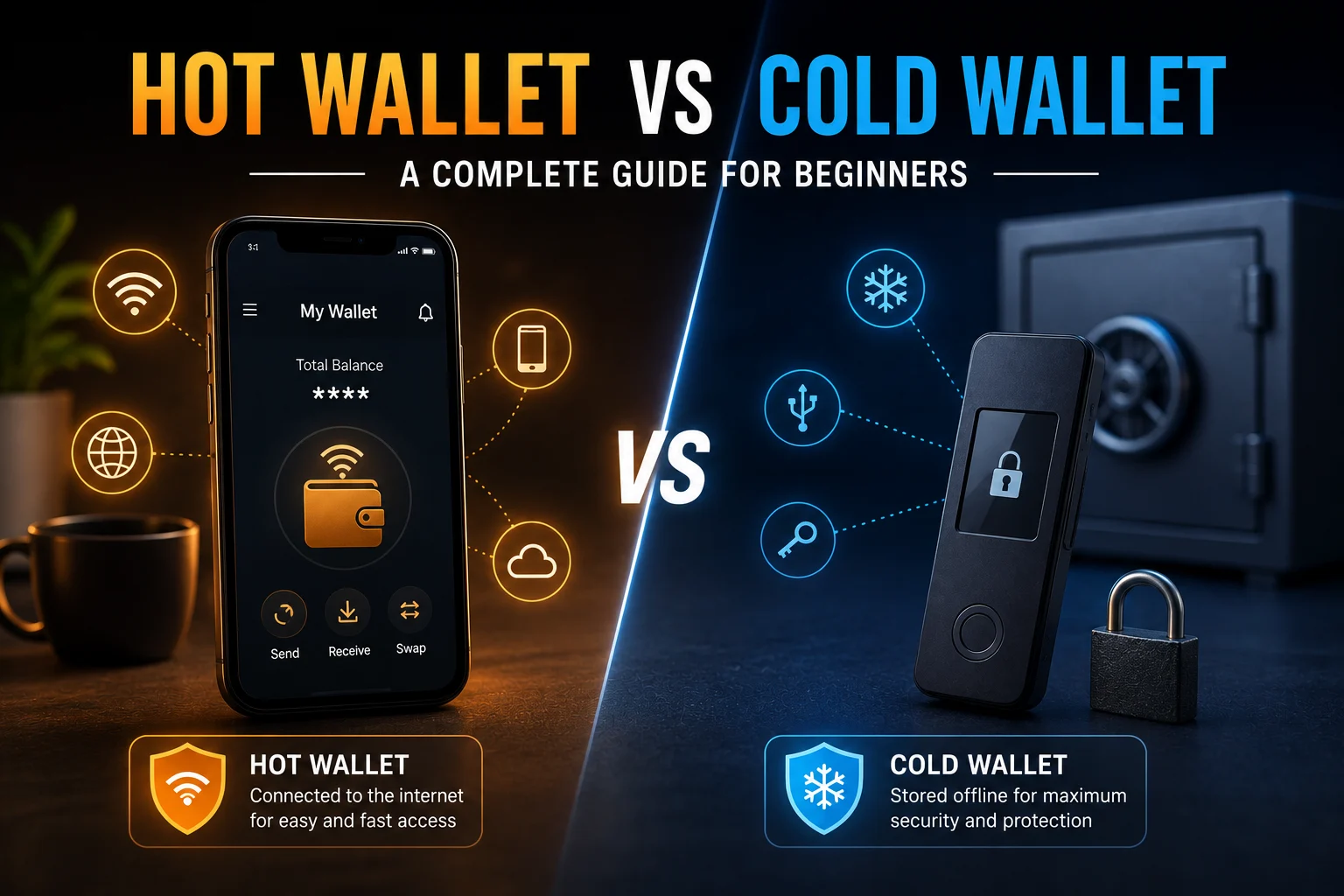
If you’re new to cryptocurrency, one of the first decisions you’ll face is choosing the right Crypto Wallet. As you explore different options, you’ll quickly come across two common terms: Hot Wallet and Cold Wallet. While both are designed to store and manage your digital assets, they work in different ways and offer different levels of convenience and security.
Understanding the difference between hot and cold wallet options is important because the wallet you choose can directly affect how safely you store your cryptocurrency. Whether you own a Bitcoin Wallet, an Ethereum Wallet, or a Multi-Currency Wallet, knowing how each wallet works helps you protect your investments and avoid common mistakes.
Many beginners assume that all wallets store cryptocurrency in the same way. In reality, a Cryptocurrency Wallet does not hold your coins physically. Instead, it stores the information needed to access and manage your crypto on the blockchain. That’s why choosing the right Crypto Storage solution is just as important as deciding which cryptocurrency to buy.
In this beginner-friendly guide, you’ll learn:
- What a Crypto Wallet is and how it works
- The difference between a Hot Wallet and a Cold Wallet
- The different Crypto Wallet Types available today
- The pros and cons of each wallet
- Which wallet is best for beginners
- Practical tips to keep your crypto safe
By the end of this guide, you’ll have a clear understanding of the Best Way to Store Crypto based on your goals, experience level, and security needs.
What is a Crypto Wallet and How Does It Work?
A Crypto Wallet, also known as a Cryptocurrency Wallet or Digital Wallet for Crypto, is a tool that allows you to store, send, receive, and manage your Crypto Assets securely. It acts as the bridge between you and the blockchain, giving you access to your cryptocurrency whenever you need it.
Unlike a traditional wallet that holds cash or cards, a crypto wallet doesn’t actually store your coins. Your cryptocurrency always remains on the blockchain. The wallet simply stores the credentials that allow you to access and control those assets.
These credentials include:
- Private Keys
- Public Keys
- Recovery or Seed Phrase
Together, these components allow you to verify ownership and authorize Crypto Transactions securely.
Most modern wallets also support multiple cryptocurrencies, making them a convenient Blockchain Wallet for users who hold Bitcoin, Ethereum, and other digital currencies in one place.
Depending on your needs, you can choose between several Crypto Wallet Types, including:
| Wallet Type | Internet Connection | Best For |
|---|---|---|
| Hot Wallet | Connected to the internet | Daily transactions |
| Cold Wallet | Offline | Long-term storage |
| Software Wallet | Installed on devices | Frequent use |
| Hardware Wallet | Physical device | Maximum security |
Choosing the right wallet depends on how often you use your crypto, how much you own, and the level of security you need.
➤ Public Keys vs Private Keys
Understanding Public Keys and Private Keys is one of the most important parts of learning how cryptocurrency works.
Although they work together, they serve completely different purposes.
1. Public Key
A public key works like your bank account number.
You can safely share it with other people when you want to receive cryptocurrency. Your wallet uses the public key to generate your wallet address, allowing others to send funds to you.
Sharing your public key does not give anyone access to your cryptocurrency.
2. Private Key
Your private key is the secret code that proves you own your crypto.
It allows you to:
- Access your wallet
- Approve transactions
- Transfer cryptocurrency
- Control your digital assets
Unlike your public key, your private key should never be shared with anyone.
If someone gains access to your private key, they can take full control of your cryptocurrency, and in most cases, those transactions cannot be reversed.
Many modern wallets simplify this process by generating a Seed Phrase or Recovery Phrase, which acts as a backup for your private keys.
➤ How Wallet Addresses and Transactions Work
Every crypto wallet comes with a unique wallet address that allows you to receive cryptocurrency from other users.
Think of it as an email address for your crypto.
When someone wants to send you Bitcoin or Ethereum, they simply enter your wallet address and complete the transaction.
Here’s a simple overview of how the process works:
- You share your wallet address with the sender.
- The sender initiates the transaction.
- The blockchain verifies the transaction.
- Your wallet reflects the updated balance after confirmation.
When sending cryptocurrency, your wallet uses your Private Keys to digitally sign the transaction. This signature proves that you are the rightful owner of the funds without revealing your private key to anyone.
Because blockchain transactions are permanent, it’s important to double-check wallet addresses before sending funds. Even a small mistake can result in irreversible losses.
Understanding how wallet addresses, public keys, and private keys work together forms the foundation of safe cryptocurrency ownership.
What is a Hot Wallet?
A Hot Wallet is a type of Online Crypto Wallet that remains connected to the internet. Because it’s always online, it allows users to send, receive, and manage cryptocurrency quickly and conveniently.
Hot wallets are one of the most popular choices for beginners because they are easy to set up and use. Most can be installed within minutes as a mobile app, desktop application, web wallet, or browser extension.
A hot wallet is ideal for people who:
- Buy and sell crypto regularly
- Make frequent transactions
- Interact with decentralized applications (dApps)
- Trade cryptocurrencies on exchanges
Since these wallets are internet-connected, they provide fast access to your funds whenever needed.
Some popular Hot Wallet Examples include:
- MetaMask
- Trust Wallet
- Coinbase Wallet
- Exodus
These wallets often support multiple cryptocurrencies, making them a practical choice for managing different digital assets from a single application.
However, because hot wallets remain online, they are generally more exposed to hacking attempts, phishing attacks, and malware than offline storage solutions. For that reason, many experienced users keep only the amount they need for daily use in a hot wallet while storing larger holdings in cold storage.
What is a Cold Wallet?
A Cold Wallet is an Offline Crypto Wallet that stores your private keys without maintaining a constant internet connection. Since it stays offline most of the time, it significantly reduces the risk of online attacks.
Many investors consider a cold wallet the Best Way to Store Crypto for long-term holdings because it offers a higher level of protection against hackers.
Cold wallets are commonly used by people who:
- Hold cryptocurrency for months or years
- Own large amounts of crypto
- Prioritize security over convenience
- Practice Self-Custody of their digital assets
Unlike hot wallets, accessing funds from a cold wallet usually requires connecting the device or following additional verification steps before approving a transaction.
Common Cold Wallet Examples include:
- Ledger hardware wallets
- Trezor hardware wallets
- Paper wallets
- Air-gapped wallets
Although cold wallets require a little more effort to use, they offer excellent Cryptocurrency Security for long-term investors who want to reduce online risks.
Types of Hot Wallets
Hot wallets come in several forms, each designed for different devices and use cases. Choosing the right one depends on how you plan to manage your cryptocurrency and how often you access it.
♦ Web Wallets
A Web Wallet runs directly in your web browser without requiring software installation.
These wallets are easy to access from multiple devices, making them convenient for users who need quick access to their funds.
Advantages:
- Easy to access
- No installation required
- Convenient for beginners
Limitations:
- Depends on internet connectivity
- Higher exposure to online threats if security practices are poor
♦ Mobile Wallets
A Mobile Wallet is a smartphone application that allows you to manage cryptocurrency on the go.
These wallets are ideal for users who frequently send or receive crypto and want instant access from their mobile devices.
Common features include:
- QR code scanning
- Biometric authentication
- Push notifications
- Multi-currency support
Mobile wallets are among the most popular choices for beginners because they combine convenience with user-friendly interfaces.
♦ Desktop Wallets
A Desktop Wallet is software installed on your computer.
Unlike web wallets, desktop wallets store wallet information locally on your device, giving users greater control over their crypto.
Benefits include:
- Better local control
- More advanced features
- Suitable for regular crypto users
However, users should keep their computers secure with antivirus software and regular updates to reduce security risks.
♦ Browser Extension Wallets
Browser extension wallets are installed directly into browsers such as Chrome or Firefox.
They are widely used for connecting with decentralized applications (dApps), NFT marketplaces, and decentralized exchanges.
These wallets make blockchain interactions quick and convenient without leaving your browser.
Because browser extensions remain connected to the internet, it’s important to install them only from official sources and carefully review website permissions before approving any transaction.
Types of Cold Wallets
A Cold Wallet keeps your private keys offline, making it one of the safest Crypto Storage Solutions available. Since it isn’t constantly connected to the internet, it offers stronger protection against hacking attempts, phishing attacks, and malware.
There are several types of cold wallets, each designed for different security needs and budgets.
✦ Hardware Wallets
A Hardware Wallet is a physical device built specifically for storing cryptocurrency securely. It keeps your Private Keys offline and only connects to a computer or smartphone when you need to approve a transaction.
Many long-term investors consider a hardware wallet the Best Cold Wallet option because it provides a strong balance between security and usability.
Popular hardware wallets include:
- Ledger
- Trezor
When comparing Ledger vs Trezor Wallet, both provide excellent security features, backup options, and support for multiple cryptocurrencies. The right choice often comes down to personal preference, supported coins, and user interface.
Benefits of hardware wallets include:
- Offline storage of private keys
- Protection from most online attacks
- Support for multiple cryptocurrencies
- Easy backup using a Recovery Phrase
- Suitable for long-term holdings
The only downside is that they cost more than software wallets, but many users consider the extra security worth the investment.
✦ Paper Wallets
A paper wallet is one of the oldest methods of Offline Crypto Storage.
Instead of using software or a physical device, the wallet’s public and private keys are printed or written on paper and stored in a safe location.
Because it never connects to the internet, it eliminates many online security risks.
However, paper wallets also come with several challenges:
- Paper can be damaged by water or fire.
- It can fade or become unreadable over time.
- If lost, there is usually no way to recover your crypto.
- Creating one securely requires extra care.
For these reasons, paper wallets are less common today than they were in the early days of cryptocurrency.
✦ Air-Gapped Wallets
An air-gapped wallet is a wallet stored on a device that has never been connected to the internet.
These wallets provide one of the highest levels of Cryptocurrency Security because hackers cannot remotely access a completely offline device.
Air-gapped wallets are commonly used by:
- Institutional investors
- Businesses holding large crypto reserves
- Experienced crypto users
- Individuals managing significant long-term investments
Although they offer excellent protection, they require more technical knowledge and are generally not the first choice for beginners.
Hot Wallet vs Cold Wallet: Key Differences
Both wallets allow you to store and manage cryptocurrency, but they serve different purposes. Understanding their strengths and limitations makes it easier to choose the right wallet for your needs.
| Feature | Hot Wallet | Cold Wallet |
|---|---|---|
| Internet Connection | Always online | Stored offline |
| Security | Good but more exposed to online threats | Very high security |
| Accessibility | Instant access | Requires extra steps |
| Cost | Usually free | Often requires purchasing a device |
| Best For | Daily transactions | Long-term storage |
| Risk Level | Higher online risk | Lower online risk |
Let’s look at these differences in more detail.
► Security
When discussing Hot Wallet vs Cold Wallet Security, the biggest difference is internet connectivity.
A hot wallet is connected to the internet, making it more vulnerable to:
- Malware
- Phishing attacks
- Fake wallet websites
- Device hacking
A cold wallet stores your private keys offline, making it much harder for attackers to access your funds remotely.
If security is your highest priority, a cold wallet is generally the safer option.
► Internet Connectivity
A hot wallet stays connected to the internet almost all the time.
This allows you to:
- Send crypto instantly
- Receive payments quickly
- Connect to exchanges
- Use decentralized applications
A cold wallet remains offline until you intentionally connect it to approve a transaction.
This extra step improves security but reduces convenience.
► Accessibility and Convenience
Hot wallets are designed for speed.
You can usually access your wallet within seconds using your smartphone, browser, or desktop application.
Cold wallets require additional steps, such as:
- Connecting the hardware wallet
- Entering a PIN
- Confirming the transaction on the device
Although this process takes longer, it greatly improves security.
► Cost
Most Software Wallet applications are free to download and use.
Examples include:
- MetaMask
- Trust Wallet
- Exodus
A Hardware Wallet usually requires purchasing a physical device.
While this adds an upfront cost, many investors see it as an investment in protecting valuable crypto holdings.
► Ideal Use Cases
The right wallet depends on how you use cryptocurrency.
Choose a Hot Wallet if you:
- Trade frequently
- Use crypto every day
- Buy NFTs
- Interact with decentralized applications
Choose a Cold Wallet if you:
- Hold crypto for months or years
- Own large amounts of cryptocurrency
- Want maximum security
- Prefer long-term Crypto Storage
Many experienced users combine both wallet types for better convenience and protection.
Hot Wallet vs Cold Wallet: Advantages and Disadvantages
Both wallet types have strengths and weaknesses. Knowing them helps you decide which option fits your needs.
✸ Advantages of Hot Wallets
Hot wallets are popular because they are easy to use.
Their main advantages include:
- Quick access to your cryptocurrency
- Easy setup for beginners
- Supports daily transactions
- Works well with exchanges and decentralized apps
- Available on mobile, desktop, and web
For someone just starting with crypto, a hot wallet is often the easiest way to begin.
✸ Disadvantages of Hot Wallets
Despite their convenience, hot wallets have limitations.
These include:
- Greater exposure to hacking attempts
- Higher phishing risks
- Vulnerable if your device becomes infected
- Requires strong security practices
If you store large amounts of cryptocurrency, relying only on a hot wallet may not be the safest approach.
✸ Advantages of Cold Wallets
Cold wallets are designed with security in mind.
Their benefits include:
- Excellent protection against online attacks
- Ideal for long-term investors
- Keeps private keys offline
- Supports secure self-custody
- Lower risk of wallet hacking
Many investors move long-term holdings into cold storage while keeping only a smaller amount in a hot wallet for everyday use.
✸ Disadvantages of Cold Wallets
Cold wallets are highly secure, but they also have a few drawbacks.
Some common disadvantages are:
- Slower access to funds
- Hardware wallets require an initial purchase
- Easier to misplace if not stored carefully
- Less convenient for frequent trading
For users making regular crypto transactions, a cold wallet alone may feel less practical.
Can You Use Hot and Cold Wallets Together?
Yes. In fact, many experienced crypto users do exactly that.
Using both wallet types allows you to balance convenience with security.
A common approach looks like this:
- Keep a small amount of cryptocurrency in a Hot Wallet for everyday transactions.
- Store the majority of your holdings in a Cold Wallet for long-term protection.
This approach works much like managing personal finances. You might keep spending money in your regular bank account while setting aside larger savings in an emergency fund. Similarly, a hot wallet is useful for daily activity, while a cold wallet protects the crypto you don’t plan to use often.
This combination helps reduce risk without sacrificing accessibility.
Which is Better for Beginners: Hot Wallet or Cold Wallet?
There isn’t a single answer that fits everyone.
The best choice depends on how you plan to use cryptocurrency.
A Hot Wallet is usually better for beginners who:
- Are buying crypto for the first time
- Want an easy setup process
- Make occasional transactions
- Hold smaller amounts
A Cold Wallet is a better option if you:
- Plan to invest for the long term
- Own a larger amount of cryptocurrency
- Want stronger protection for your digital assets
Many beginners start with a hot wallet because it’s simple to use. As their investments grow, they often add a hardware wallet for better security.
Choosing a wallet is just one part of managing your finances. Just as people compare saving vs investing before making financial decisions, crypto investors should think about both convenience and security before selecting a wallet.
Common Crypto Wallet Mistakes Beginners Should Avoid
Learning how to use a Crypto Wallet is just as important as choosing one. Many beginners lose access to their cryptocurrency not because of a faulty wallet, but because of avoidable mistakes.
Being aware of these common errors can help you protect your Crypto Assets and reduce unnecessary risks.
➤ Sharing Private Keys or Recovery Phrases
Your Private Keys and Recovery Phrase are the most sensitive parts of your wallet.
No legitimate wallet provider, exchange, or support team will ever ask you to share them.
If someone gets access to your private keys or recovery phrase, they can control your wallet and transfer your cryptocurrency without your permission.
To stay safe:
- Never share your private keys with anyone.
- Never send your recovery phrase through email or messaging apps.
- Keep this information offline whenever possible.
- Ignore anyone claiming they need your recovery phrase to “verify” your wallet.
Protecting your private keys is one of the most important steps in maintaining Crypto Wallet Security.
➤ Failing to Back Up Your Recovery Phrase
When you create a wallet, you’ll usually receive a Seed Phrase or Recovery Phrase, typically consisting of 12 or 24 words.
This phrase is your backup.
If your phone, computer, or hardware wallet is lost, stolen, or damaged, the recovery phrase allows you to restore access to your wallet.
Many beginners either skip this step or save the phrase in an insecure location.
A better approach is to:
- Write it down clearly.
- Store it in a secure place.
- Keep multiple offline copies in separate locations.
- Never rely only on screenshots or cloud storage.
Without your recovery phrase, recovering your wallet may not be possible.
➤ Using Unverified Wallet Apps
Not every wallet app available online is trustworthy.
Cybercriminals sometimes create fake wallet applications that look almost identical to legitimate ones. Once installed, these fake apps may steal your private keys or recovery phrase.
Before downloading any wallet:
- Use the official website.
- Verify the developer’s name.
- Read recent user reviews.
- Avoid downloading apps from unknown sources.
Taking a few extra minutes to verify the wallet can help prevent costly mistakes.
➤ Falling for Phishing Scams
Phishing remains one of the most common threats in cryptocurrency.
Scammers create fake websites, emails, social media accounts, or advertisements that imitate trusted wallet providers.
Their goal is simple: convince you to reveal your login details, private keys, or recovery phrase.
To reduce the risk:
- Double-check website URLs.
- Bookmark official wallet websites.
- Avoid clicking suspicious links.
- Never enter your recovery phrase on a website unless you’re intentionally restoring your wallet through the official application.
A cautious approach goes a long way in protecting your digital assets.
➤ Sending Crypto to the Wrong Address or Network
Blockchain transactions cannot usually be reversed.
If you send cryptocurrency to the wrong wallet address or use an unsupported network, your funds may be permanently lost.
Before confirming any transaction:
- Verify the wallet address carefully.
- Check that you’re using the correct blockchain network.
- Send a small test transaction when transferring a large amount.
- Review all transaction details before approving them.
A quick review can prevent expensive mistakes.
Best Practices For Keeping Your Crypto Wallet Secure
No wallet is completely risk-free, but following good security practices can greatly improve your protection.
1. Store Private Keys and Recovery Phrases Securely
Your private keys and recovery phrase should always remain under your control.
Good practices include:
- Store them offline.
- Keep them away from internet-connected devices.
- Use a secure location that only you can access.
- Consider using fireproof or waterproof storage for physical backups.
The safer your backup, the safer your cryptocurrency.
2. Enable Two-Factor Authentication Where Available
Many Online Crypto Wallet services and exchanges support two-factor authentication (2FA).
When enabled, you’ll need a second verification step in addition to your password.
This extra layer of protection makes it much harder for someone to access your wallet, even if they know your password.
Authenticator apps generally provide stronger security than SMS-based verification.
3. Keep Wallet Software and Firmware Updated
Wallet developers regularly release updates that improve security, fix bugs, and add support for new blockchain features.
Whether you’re using a Software Wallet or a Hardware Wallet, install updates from official sources as soon as they’re available.
Running outdated software can expose your wallet to known security vulnerabilities.
4. Use Cold Storage For Large or Long-Term Holdings
If you plan to hold cryptocurrency for months or years, consider moving most of it into an Offline Crypto Wallet.
Cold storage reduces exposure to online threats and provides stronger protection for valuable holdings.
Many investors follow a simple strategy:
- Keep a smaller amount in a hot wallet for daily transactions.
- Store the majority in cold storage for long-term security.
This approach offers both convenience and peace of mind.
5. Verify Addresses and Networks Before Transactions
Before sending cryptocurrency:
- Confirm every character of the wallet address.
- Verify the blockchain network.
- Review the transaction amount.
- Double-check the recipient’s details.
Many wallets allow you to scan QR codes, which can reduce typing errors. Even so, it’s still wise to review the information before confirming the transaction.
How to Choose the Right Crypto Wallet for Your Needs
There is no single wallet that’s perfect for everyone.
The right choice depends on how you use cryptocurrency, your security expectations, and your level of experience.
✦ Consider How You Plan to Use Your Crypto
Start by asking yourself a few simple questions:
- Will you trade regularly?
- Are you investing for the long term?
- Do you make frequent payments?
- Will you store several cryptocurrencies?
If you need quick daily access, a hot wallet may be the better choice.
If your goal is long-term Crypto Storage, a cold wallet is usually the safer option.
✦ Evaluate Your Security Needs
Think about the amount of cryptocurrency you plan to store.
For smaller balances, a reputable hot wallet may provide enough security when combined with strong passwords and good online safety habits.
For larger investments, many users prefer a hardware wallet because it keeps private keys offline.
Your security strategy should grow as your investment grows.
Check Supported Cryptocurrencies and Networks
Not every wallet supports every cryptocurrency.
Before creating a wallet, verify that it supports the coins and blockchain networks you plan to use.
For example, if you own both a Bitcoin Wallet and an Ethereum Wallet, choosing a Multi-Currency Wallet can simplify managing your portfolio from one place.
✦ Consider Ease of Use and Accessibility
Especially for beginners, an easy-to-use wallet can make learning much smoother.
Look for features such as:
- Simple interface
- Clear transaction history
- QR code support
- Mobile and desktop compatibility
- Helpful backup instructions
A wallet that’s easy to understand reduces the chances of making mistakes.
✦ Review Backup and Recovery Options
Before trusting any wallet, understand how recovery works.
Ask yourself:
- Does it provide a recovery phrase?
- Is restoring the wallet straightforward?
- Are backup instructions easy to follow?
- Can you recover access if your device is lost?
Reliable backup options are essential for protecting your cryptocurrency over the long term.
Conclusion
Choosing between a Hot Wallet vs Cold Wallet ultimately comes down to how you plan to use your cryptocurrency.
A hot wallet offers speed, convenience, and easy access, making it a great choice for beginners and users who make regular transactions. A cold wallet, on the other hand, provides stronger protection by keeping your private keys offline, making it better suited for long-term storage and larger crypto holdings.
For many people, the best approach is to use both. A hot wallet can handle everyday transactions, while a cold wallet keeps long-term investments secure.
As you continue learning about cryptocurrency, remember that wallet security is just one part of managing your finances wisely. Just as you might compare fintech vs banking before choosing financial services or start micro-investing to build long-term wealth, selecting the right crypto wallet should be based on your goals, comfort level, and security needs.
By understanding how different wallets work, protecting your recovery phrase, and following good security practices, you’ll be in a much better position to manage your digital assets with confidence.
Disclaimer
This blog is published for educational and informational purposes only. The information provided should not be considered financial, investment, legal, or trading advice, nor should it be interpreted as a recommendation to buy, sell, or hold any cryptocurrency.
Before making any investment or trading decisions, always consult a qualified financial advisor or cryptocurrency expert. Any action you take based on the information presented in this blog is entirely at your own risk. thedigitalarticles.com, its authors, editors, and team shall not be held responsible for any financial losses, investment decisions, or any direct or indirect damages resulting from the use of the information provided in this article.
Thank you for reading!
Thank You for Reading!
If you found this blog helpful and now have a better understanding of the difference between a Hot Wallet and a Cold Wallet, please consider sharing it with anyone interested in learning about cryptocurrency.