
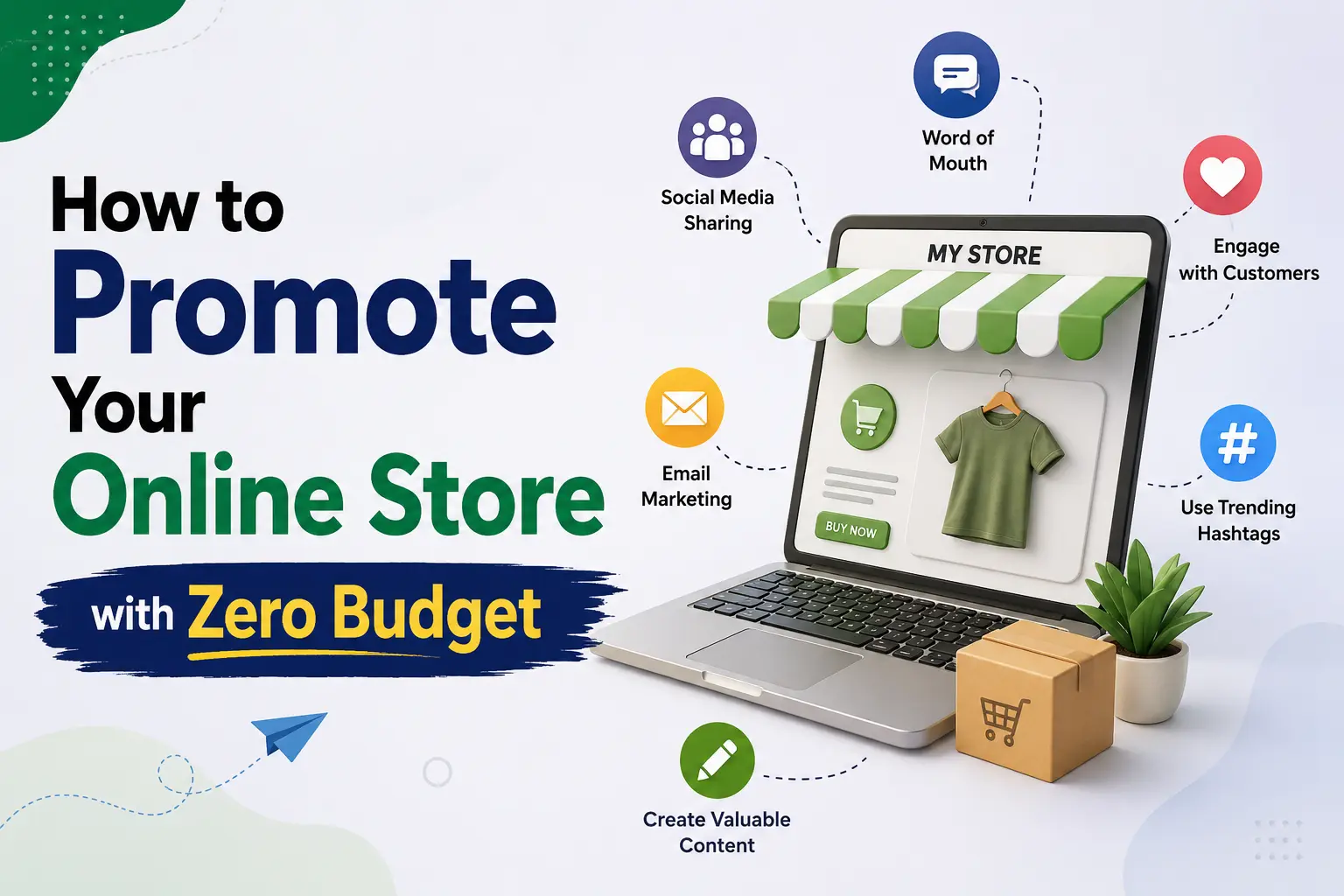
Starting an online store is the easy part. Getting people to actually find it, trust it, and buy from it — that’s where most new store owners get stuck, especially when there’s no ad budget to fall back on. If you’ve been searching for how to promote your online store for free, you’re not alone. Thousands of ecommerce owners launch every month with a great product and an empty marketing budget, and many of them still manage to build steady, profitable traffic.
This guide walks you through a complete, practical system for online store promotion without spending a rupee or dollar on ads. You’ll learn how to use SEO, social media, content, email, community engagement, and free tools to attract your first customers and keep growing from there. Every section is built around real tactics you can start today — no fluff, no theory, just a clear path from zero visibility to a store people actually visit and buy from.
What is Zero-Budget Online Store Promotion (and Why It Works)
Before diving into tactics, it helps to understand what zero-budget marketing really means and why it’s not just a fallback option for stores that can’t afford ads — it’s often a smarter long-term strategy.
1. What “Zero-Budget Marketing” Actually Means
Zero-budget marketing doesn’t mean doing nothing. It means replacing paid reach with your own time, effort, and creativity. Instead of paying Google or Meta to put your store in front of people, you earn that visibility through search engine optimization, content, community engagement, and word-of-mouth marketing. It costs time instead of money, and the results tend to build slowly but last much longer than a paid campaign that stops the moment you stop paying.
2. Why Zero-Budget Promotion Works for New and Small Stores
Small and new stores often have advantages that big brands don’t: they can respond personally to every customer, join niche communities without looking out of place, and move quickly without layers of approval. These strengths line up perfectly with organic marketing, which rewards authenticity and consistency over ad spend. A founder who personally answers questions on Reddit or replies to every Instagram comment builds trust that no ad can buy.
3. Benefits and Limitations of Zero-Budget Promotion
The biggest benefit is sustainability — organic traffic from SEO, content, and community trust doesn’t disappear when your budget runs out. It also tends to attract more loyal, higher-intent customers because they found you through genuine research or a recommendation rather than an ad. The trade-off is speed. Zero-budget promotion usually takes weeks or months to show real momentum, and it demands consistent effort rather than a one-time setup. Knowing this upfront helps you set realistic expectations and stay patient while the strategy compounds.
How to Build a Zero-Budget Promotion Strategy (Step-by-Step Framework)
Random posting and hoping something sticks rarely works. A simple framework keeps your efforts focused and measurable, even without a marketing team.
Step 1 – Define Your Target Audience
Before creating content or picking platforms, get specific about who you’re selling to. Think about their age range, interests, daily problems, and where they spend time online. A store selling handmade skincare for new mothers needs a completely different approach than one selling gaming accessories for teenagers. The clearer this picture is, the easier every later decision becomes, from which social platform to use to what your product descriptions should say.
Step 2 – Set Clear, Measurable Goals
Vague goals like “get more traffic” don’t tell you what to do next. Instead, set specific targets: 500 website visitors this month, 50 email subscribers, or 10 product reviews. Measurable goals let you know if a channel is working and give you a reason to keep going even when growth feels slow at first.
Step 3 – Choose the Right Free Marketing Channels
You don’t need to be everywhere. Pick two or three channels where your target audience already spends time and where you can realistically stay consistent — this might be Instagram and SEO blog content, or Pinterest and email marketing. Trying every channel at once is one of the fastest ways to burn out with nothing to show for it.
Step 4 – Create a Content and Posting Calendar
Consistency beats intensity in organic marketing. A simple calendar — even a basic spreadsheet listing what you’ll post and when — keeps you accountable and prevents long gaps that hurt momentum on social platforms and search rankings alike.
Step 5 – Track, Measure, and Optimize
Check your numbers regularly using free tools like Google Analytics and each platform’s built-in insights. Look at what’s actually driving traffic and sales, not just likes or followers, and shift your time toward what’s working.
Optimize Your Online Store for Free Organic Traffic (SEO Basics)
Search engine optimization is one of the most reliable ways to promote ecommerce store pages without spending on ads, because it targets people who are already searching for what you sell.
➤ Keyword Research for Product and Category Pages
Start by figuring out what your potential customers actually type into Google when looking for products like yours. Free tools like Google Search Console, Google’s autocomplete suggestions, and the “People also ask” section can reveal real search phrases. Focus on keywords that show clear buying intent, such as “buy organic cotton baby blankets,” rather than broad, competitive terms.
➤ On-Page SEO: Titles, Meta Descriptions, and URLs
Each product and category page needs a clear, keyword-relevant title tag, a meta description that explains what the page offers, and a clean, readable URL. These small details directly affect how your pages appear in Google search and how likely someone is to click through.
➤ Writing SEO-Friendly Product Descriptions
Generic manufacturer descriptions rarely rank well because thousands of other stores use the exact same text. Write original product descriptions that naturally include relevant keywords while focusing on real benefits and answering common customer questions. This also builds trust, since shoppers can tell when a description feels genuine rather than copied.
➤ Create Helpful SEO Blog Content
A blog attached to your store lets you rank for informational searches your potential customers make before they’re ready to buy — comparisons, how-to guides, and buying advice. Over time, this content marketing approach builds authority and brings in steady organic traffic that product pages alone can’t capture.
➤ Improve Internal Linking
Link related products, categories, and blog posts to each other throughout your site. Good internal linking helps search engines understand your site structure, keeps visitors browsing longer, and passes ranking value between your pages.
➤ Improve Site Speed and Mobile-Friendliness
A slow or clunky mobile experience pushes both shoppers and search rankings away. Compress product images, remove unnecessary apps or scripts, and regularly test your site on mobile devices, since most ecommerce traffic today comes from phones.
Get Found on Google – Local SEO & Google Business Profile Tips
If your online store also serves a local area or ships from a specific location, local SEO adds another free layer of visibility.
♦ Set Up and Optimize Your Google Business Profile
A complete, well-optimized Google Business Profile helps your store show up in local search results and Google Maps. Add accurate business hours, categories, photos, and a clear description of what you sell, and update it whenever anything changes.
♦ Keep Your Business (NAP) Information Consistent
Your business name, address, and phone number should match exactly across your website, Google Business Profile, and any directories you’re listed on. Inconsistent information confuses both customers and search engines, which can quietly hurt your local rankings.
♦ Get and Manage Customer Reviews
Reviews influence both search rankings and buyer trust. Ask happy customers directly for a review, make the process simple with a direct link, and respond to reviews — positive and negative — to show you’re an active, trustworthy business.
♦ Use Local Keywords and Location-Based Pages
If you serve specific cities or regions, create pages or content that mention those locations naturally. This helps you show up in local Google searches from people specifically looking for stores near them.
Promote Your Store on Social Media for Free
Social media marketing remains one of the fastest ways to promote an ecommerce store organically, as long as you focus on the right platforms and genuine engagement rather than just posting product photos.
► Choose the Right Platforms (Instagram, Facebook, Pinterest, TikTok)
Match the platform to your product and audience. Visual, lifestyle-driven products often do well on Instagram and Pinterest, while TikTok favors entertaining, fast-paced content, and Facebook groups work well for community-driven niches. Spreading yourself across every platform usually dilutes your results, so pick where your audience genuinely spends time.
► Create Consistent, Value-Driven Content
Mix product content with genuinely useful or entertaining posts — tips, behind-the-scenes looks, and customer stories. A feed that only sells feels exhausting to follow, while one that offers value keeps people around long enough to eventually buy.
► Engage With Your Audience
Reply to comments, answer DMs quickly, and engage with other accounts in your niche. Social platforms reward accounts that generate real conversation, and customers remember brands that feel responsive and human.
► Use Social Proof to Build Credibility
Share customer photos, testimonials, and reviews on your social channels. Seeing real people use and enjoy your products does more to convince new visitors than any product description on its own.
► Turn Followers Into Website Traffic
A large following means little if it doesn’t convert into store visits. Use link-in-bio tools, clear calls to action, and story links to consistently guide followers back to specific product or landing pages rather than just your homepage.
Leverage Short-Form Video (Reels, YouTube Shorts) for Free Reach
Short-form video currently offers some of the strongest organic reach available to small brands, since platforms actively push this format to new audiences beyond your existing followers.
✸ Video Content Ideas for Online Stores
Product demonstrations, unboxing videos, “how it’s made” clips, styling or usage tips, and quick customer testimonials all perform well. The goal is to show your product in action rather than simply describing it in text.
✸ Best Practices: Hooks, Trends, and Calls to Action
The first two to three seconds decide whether someone keeps watching, so open with a strong visual or question rather than a slow introduction. Pairing your content with relevant trends or sounds can extend reach, but always tie it back to your product naturally. End every video with a clear next step, whether that’s visiting your store, following for more, or checking the link in your bio.
✸ Repurpose Short-Form Video Content Across Platforms
A single video can be reshaped for Instagram Reels, YouTube Shorts, and TikTok with minor adjustments to captions and hashtags. This multiplies your reach without multiplying your workload.
Create Content That Attracts and Converts Customers
Beyond social posts, in-depth content builds long-term authority and answers the questions that actually move people toward a purchase.
✦ Address Customer Problems and Pain Points
Write content that speaks directly to the frustrations or questions your audience already has, such as “how to choose the right size” or “how to make a product last longer.” Content built around real problems earns trust because it’s genuinely useful, not just promotional.
✦ Publish Product Guides, Tutorials, and FAQs
Detailed guides and tutorials help customers get more value from your products while also targeting valuable long-tail search terms. FAQ content, in particular, can reduce pre-sale hesitation and support tickets at the same time.
✦ Create Comparison and Buying-Guide Content
Shoppers frequently search for comparisons before buying — “product A vs product B” or “best options for X.” Honest, well-researched comparison content positions your brand as a helpful authority rather than just another seller.
✦ Write With Buyer Intent and Clear CTAs
Every piece of content should guide the reader toward a next step, whether that’s browsing a category, signing up for updates, or making a purchase. Clear, natural calls to action prevent good content from ending without direction.
Repurpose Existing Content to Multiply Your Reach
You don’t need new ideas for every post. Reshaping content you’ve already created is one of the most efficient ways to stay consistent without burning out.
➤ Turn Blog Posts Into Social Media Posts
Break down key points from a blog post into a carousel, a short caption series, or a quick tip post. This extends the life of content you’ve already put effort into writing.
➤ Convert Content Into Short-Form Videos
A blog post or FAQ answer can often become a 30-second video script with minimal extra work, giving your written content a second life on video platforms.
➤ Create Infographics and Visual Content
Statistics, step-by-step processes, and comparisons often communicate more clearly as simple visuals. Free design tools make it easy to turn text-heavy content into shareable graphics.
➤ Repurpose Customer Questions and Reviews
Real questions from customer support or DMs make excellent content, since they reflect what your actual audience wants to know. Reviews can be turned into testimonial graphics, video content, or new FAQ entries.
Use Email Marketing Without a Budget
Email marketing remains one of the highest-converting free channels available, since you’re reaching people who have already shown interest in your store.
♦ Build an Email List Organically
Offer a simple incentive — early access, a helpful guide, or a small discount — in exchange for an email signup. Place signup forms on high-traffic pages like your homepage, blog posts, and checkout flow.
♦ Email Types That Drive Sales (Welcome, Abandoned Cart, Promo)
A welcome email introduces new subscribers to your brand, an abandoned cart email recovers sales from people who almost bought, and occasional promotional emails highlight new arrivals or offers. Most free email platforms let you automate all three without technical skills.
♦ Personalize Emails for Better Engagement
Use the subscriber’s name, reference past purchases or browsing behavior when possible, and segment your list by interest where you can. Personalized emails consistently see better open and click rates than generic blasts sent to everyone at once.
Use WhatsApp and Free Messaging Apps to Reach Customers
Messaging apps offer a direct, personal channel to customers that many small stores underuse, especially in markets where WhatsApp is a primary communication tool.
► Set Up WhatsApp Business for Free
WhatsApp Business lets you create a professional profile with your catalog, business hours, and quick replies, all at no cost. It gives your store a direct, trustworthy line of communication with customers.
► Build a Permission-Based Contact List
Only add customers who’ve opted in, whether through a checkout option or a signup form. A permission-based list keeps engagement high and avoids the trust damage that comes from unsolicited messaging.
► Share Updates via Broadcast Lists and Status
Use broadcast lists to share new arrivals, restocks, or offers without creating a group chat, and post updates to your WhatsApp Status for passive visibility among your contacts.
► Provide Customer Support Through Messaging
Quick, personal responses to questions before and after a purchase build trust and often prevent returns or negative reviews. Many customers prefer messaging over email or phone calls for quick queries.
Engage with Online Communities and Forums to Build Trust
Online communities let you reach highly engaged, relevant audiences without any advertising spend, as long as you approach them the right way.
✸ Find Relevant Communities (Reddit, Quora, Niche Forums, Facebook Groups)
Search for subreddits, Facebook groups, and forums centered around your product niche or the problems it solves. These spaces are often filled with exactly the kind of engaged, high-intent people you want to reach.
✸ Provide Value Without Spamming
Answer questions, share genuine advice, and participate in discussions without immediately pushing your store. Most communities have strict rules against blatant self-promotion, and members can quickly spot — and dismiss — anyone who only shows up to sell.
✸ Build Relationships Before Promoting Products
Spend time becoming a recognized, helpful presence before ever mentioning your store. When you do share it, it lands as a natural recommendation rather than an ad, which makes people far more receptive.
Partner With Micro-Influencers and Complementary Brands
Collaborations let you borrow trust and reach from people and brands who’ve already built an audience, often in exchange for product rather than payment.
✦ Find and Approach Micro-Influencers
Look for creators with smaller but highly engaged, niche-relevant followings rather than chasing large follower counts. Reach out with a personal message explaining why you think their audience would genuinely like your product.
✦ Cross-Promote With Complementary Brands
Partner with brands that share your audience but aren’t direct competitors — a coffee brand and a mug brand, for example. Joint giveaways, bundle offers, or shoutouts let both brands reach a new, relevant audience for free.
✦ Create Win-Win Collaboration Offers
Structure collaborations so both sides clearly benefit, whether through free products, revenue sharing, or mutual promotion. Offers that only ask for favors without giving anything back rarely get a response.
✦ Measure Collaboration Results
Track clicks, discount code usage, or direct sales tied to each collaboration so you know which partnerships are actually worth repeating.
Get Listed on Free Directories and Online Marketplaces
Beyond your own store, listing your business in the right places adds extra visibility and backlinks at no cost.
1. List on Free Business Directories
Free directories relevant to your industry or location can drive both direct traffic and useful backlinks that support your SEO. Focus on directories that are genuinely relevant rather than listing everywhere indiscriminately.
2. Choose Relevant Marketplaces (Etsy, Facebook Marketplace, etc.)
Depending on your product type, marketplaces like Etsy or Facebook Marketplace can introduce your store to shoppers actively looking to buy, without any listing cost for many categories.
3. Optimize and Keep Listings Accurate and Consistent
Use clear product titles, accurate descriptions, and updated stock information across every listing. Outdated or inconsistent listings hurt both customer trust and your visibility on these platforms.
Turn Customers into Brand Advocates with UGC, Reviews, and Referrals
Your existing customers are one of the most underused free marketing channels available — genuinely happy buyers are often willing to promote you if you make it easy.
➤ Encourage Customers to Create UGC
Ask customers to share photos or videos using your product, and make it simple by suggesting a hashtag or offering to feature their content. User-generated content builds trust because it comes from real buyers, not the brand itself.
➤ Collect and Showcase Reviews and Testimonials
Make leaving a review as easy as possible, whether through a direct link after purchase or a quick on-site prompt. Display these reviews prominently on product pages, since social proof directly influences buying decisions.
➤ Build a Simple Referral Program
Offer existing customers a small incentive — a discount or store credit — for referring friends. Referral marketing tends to bring in high-quality customers because the recommendation comes from someone they already trust.
Run Contests and Giveaways to Boost Organic Engagement
Contests can generate a quick burst of visibility and engagement, especially when designed to encourage sharing rather than just following.
♦ Choose a Simple Contest Format
Keep entry requirements simple — following your account, tagging a friend, or sharing a post — so more people are willing to participate without friction.
♦ Set Clear Participation Rules
State the entry requirements, deadline, and prize clearly upfront, and make sure your rules follow each platform’s contest guidelines to avoid your post being penalized or removed.
♦ Promote the Contest Organically
Share the contest across every channel you have — social media, email, and messaging apps — to maximize participation without spending on ads.
♦ Follow Up After the Contest
Announce the winner publicly to build trust, and follow up with all participants through a thank-you message or a small discount, turning entrants into potential customers even if they didn’t win.
Use Free Tools to Automate Your Marketing Tasks
The right free tools can save hours each week and make consistent marketing realistic even for a one-person team.
► Free SEO and Keyword Research Tools
Google Search Console and Google Analytics are essential, no-cost tools for understanding what’s driving traffic and how your site performs in search. Google’s own autocomplete and related-search features also work as simple, free keyword research tools.
► Free Content Creation and Design Tools
Free design tools let you create social graphics, product images, and promotional content without hiring a designer, making it realistic to maintain a consistent visual style across platforms.
► Free Social Media Scheduling Tools
Scheduling tools let you plan and queue posts in advance, which helps maintain consistency even on busy weeks and prevents the last-minute scramble that often leads to skipped posts.
► Free Email and Messaging Automation Tools
Most email platforms offer free tiers that support automated welcome sequences and abandoned cart emails up to a certain subscriber count, letting you run consistent email marketing without a paid plan while you’re still growing.
Track and Improve Your Zero-Budget Marketing Results
Marketing without a budget still needs a system for measuring what’s working; otherwise you’re just guessing where to spend your time.
✸ Free Analytics Tools (Google Analytics, Meta Insights)
Google Analytics shows you where your website traffic comes from and how visitors behave once they arrive, while each social platform’s built-in insights reveal which content resonates most with your audience.
✸ Key Metrics to Track (Traffic, Engagement, Conversions)
Watch overall traffic, engagement rates on social content, and — most importantly — conversion rate, since traffic and likes only matter if they eventually lead to sales.
✸ Identify Your Best-Performing Channels
Compare results across channels regularly rather than assuming. You might find that one underused platform is quietly outperforming the one you’ve invested the most time in.
✸ Adjust Strategy Based on Data
Once you know what’s working, shift more of your time and energy there, and either fix or drop what consistently underperforms after a fair testing period.
Common Mistakes to Avoid When Promoting an Online Store
Even with the right tactics, a few common missteps can slow down your results significantly.
✦ Trying Too Many Channels at Once
Spreading your limited time across too many platforms usually means doing all of them poorly. Focus on fewer channels done consistently well rather than a shallow presence everywhere.
✦ Focusing on Promotion Instead of Value
An account or blog that only sells struggles to build an audience. Balance promotional content with genuinely useful or engaging material that gives people a reason to stick around.
✦ Ignoring SEO and Search Intent
Skipping SEO means missing out on consistent, free traffic from people actively searching for what you sell. Even basic on-page optimization can meaningfully improve your visibility over time.
✦ Spamming Communities and Customers
Overly aggressive self-promotion in communities or repeated unsolicited messages damages trust quickly and can get you banned from valuable spaces. Value-first engagement always outperforms spam in the long run.
✦ Failing to Track Results
Without tracking, it’s impossible to know which efforts are actually paying off. Skipping analytics means repeating ineffective tactics simply because you’re not sure what else to try.
Conclusion
Promoting an online store with zero budget isn’t about finding one magic tactic — it’s about consistently combining SEO, content, social media, community engagement, and customer relationships over time. None of these channels deliver overnight results, but together, they build a foundation of organic traffic and trust that doesn’t disappear the moment you stop spending. Start with one or two channels that fit your audience and your available time, track what’s working, and expand from there. The stores that grow fastest without a budget are rarely the ones with the cleverest single trick — they’re the ones that show up consistently, provide real value, and keep refining their approach based on what the data actually shows.
FAQs
Can I Promote an Online Store Without Spending Money?
Yes. SEO, social media, content marketing, email, community engagement, and referrals can all be done without a paid budget, though they require consistent time and effort instead of money.
What Is the Best Free Way to Promote an Online Store?
There’s no single best channel — it depends on your product and audience. That said, SEO and social media are usually the two highest-impact starting points because they combine long-term compounding traffic with quick, direct audience access.
How Can I Get Free Traffic to My Online Store?
Focus on organic search through SEO-optimized product and blog content, consistent social media posting, community engagement, and word-of-mouth referrals from happy customers.
How Can I Promote My Online Store on Social Media for Free?
Post consistent, value-driven content on the platforms your audience actually uses, engage genuinely with comments and messages, and use features like Stories, Reels, and link-in-bio tools to guide followers back to your store.
How Long Does Zero-Budget Store Promotion Take to Work?
Most store owners start seeing meaningful traction within two to three months of consistent effort, though SEO in particular can take longer to fully build momentum. Patience and consistency matter more than speed here.
Can SEO Help Promote an Online Store for Free?
Yes. SEO is one of the most sustainable free promotion methods available, since it targets people already searching for products like yours and continues driving traffic long after the initial work is done.
Disclaimer
The information provided in this article is for general educational and informational purposes only. It is based on publicly available marketing practices and general industry knowledge, and does not constitute professional business, marketing, financial, or legal advice.
While we strive to keep the content accurate, practical, and up to date, results from any marketing strategy — including SEO, social media, email marketing, or other free promotion methods – can vary significantly depending on your niche, industry, audience, product, effort, and consistency. We do not guarantee specific outcomes such as increased traffic, sales, followers, or search rankings.
Any tools, platforms, or third-party services mentioned in this article (such as Google, Instagram, WhatsApp, Etsy, etc.) are referenced solely for informational purposes. We are not affiliated with, endorsed by, or sponsored by these companies unless explicitly stated. All trademarks, logos, and brand names belong to their respective owners.
Before implementing any marketing strategy for your business, we recommend evaluating your specific business needs, consulting relevant platform guidelines and terms of service, and, where necessary, seeking advice from a qualified marketing or business professional.