
Projects usually do not fail because the people working on the projects are not putting in effort. Most of the time, things go wrong with projects because the teams working on the projects lose track of the tasks for the projects.
The deadlines for the projects are getting closer. The updates for the projects stay buried in long email threads. Nobody really knows what’s happening with the projects. That sounds familiar, right?
Many businesses start out using spreadsheets, notes, chat messages, and having weekly meetings. This works for a while. As the project team grows, managing project work becomes more difficult. That is when project management software becomes really important for the project team.
The good news is that there are a lot of project management options. The challenge is choosing a project management tool that fits your project team, rather than forcing your project team to fit the project management software.
To make your decision easier, here is a practical look at some of the best project management tools for teams available today for your project.
Best Project Management Tools: Quick Comparison Table
The table below shows –
| Tool | Best For | Ease of Use |
|---|---|---|
| Asana | Growing teams | Easy |
| Trello | Small teams | Very Easy |
| Monday.com | Multiple departments | Easy |
| Jira | Software teams | Moderate |
| Notion | Documentation and planning | Easy |
| ClickUp | All-in-one project management | Moderate |
| Microsoft Project | Enterprise projects | Advanced |
| Basecamp | Remote collaboration | Easy |
| Smartsheet | Spreadsheet users | Moderate |
| Wrike | Large teams | Moderate |
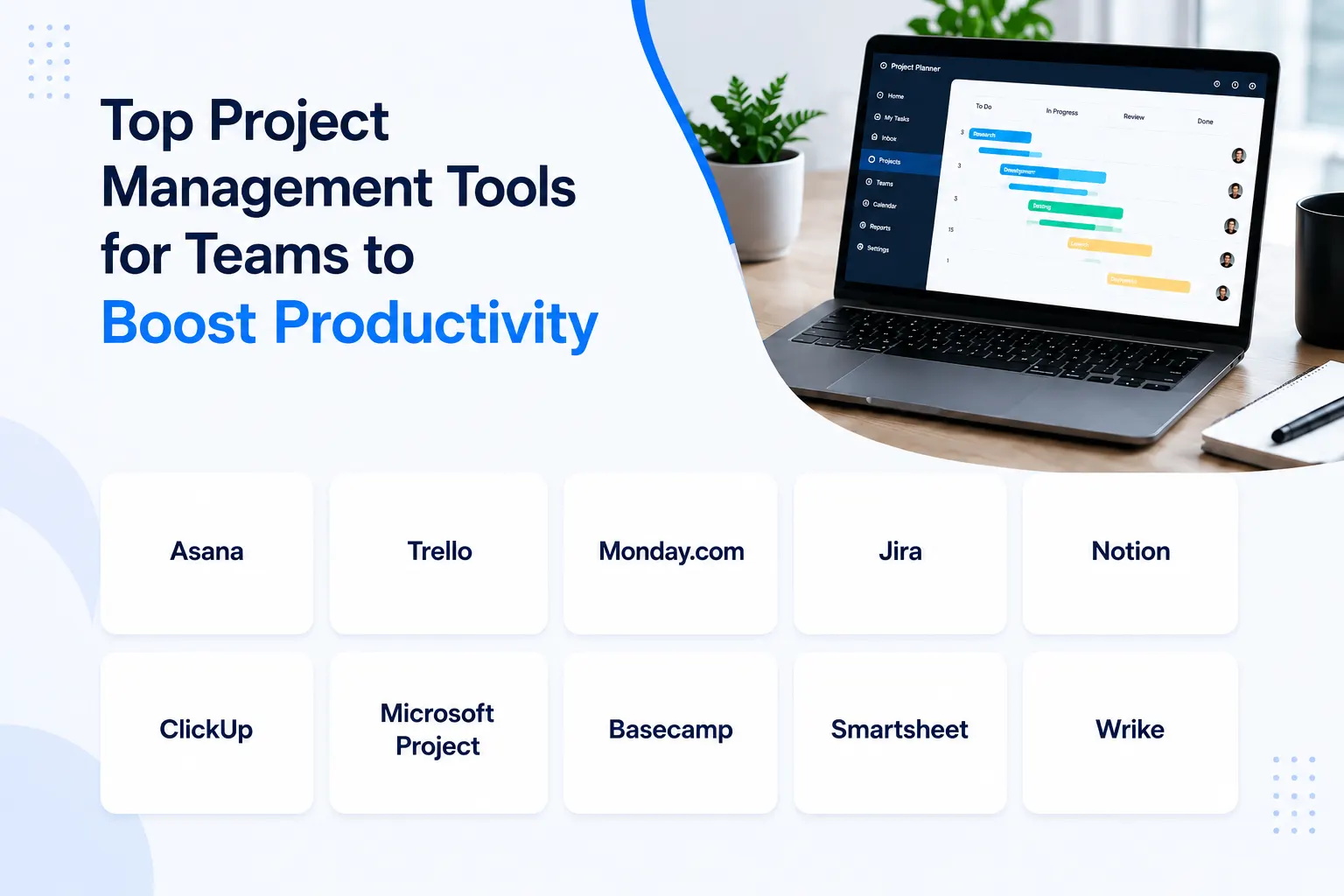
Now that we’ve reviewed the Top 10 Project Management Tools list, let’s take a closer look at each tool and explore it in detail.
1. Asana
Asana is usually among the choices for businesses that want to stop using spreadsheets. They like it because it is easy to use and has lots of features. Team members can make tasks give them to someone, set a deadline, and see how things are going without needing to learn it for weeks. A big. Can everyone see what is going on?
People know who is in charge of each task. This helps to avoid a lot of confusion at work. It is really helpful to have this kind of visibility. Team members can focus on their work. Asana helps to make work easier.
Why Teams Like It
- Clean interface
- Easy task management
- Timeline view
- Workflow automation
- Strong reporting features
Best For
Marketing teams, agencies, operations teams, and growing businesses.
| Tool | Availability | Total Downloads |
|---|---|---|
| Asana | Website, Play Store, App Store | 5 Million+ |
2. Trello
Not every team needs something that’s really hard to figure out. Sometimes you just need a way to get things done and make sure everyone is on the page. That is where Trello is really good at helping teams. The way Trello works with cards and boards is very easy to understand. Even people on your team who have never used software to manage projects before can start using Trello in a few minutes.
A lot of companies and startups use Trello because Trello makes things easier for them, not more complicated. Trello does this by keeping things simple, which is what people like about Trello. Trello is simple. That is why people like using Trello.
Why Teams Like It
- Quick setup
- Visual workflow
- User-friendly design
- Affordable plans
- Easy collaboration
Best For
Small businesses, startups, freelancers, and creative teams.
| Tool | Availability | Total Downloads |
|---|---|---|
| Trello | Website, Play Store, App Store | 10 Million+ |
3. Monday.com
Monday.com has become very popular in recent times because it is useful for many different parts of a company. The marketing team uses Monday.com to manage their campaigns. The human resources team uses it when they are hiring people. The sales team uses Monday.com to keep track of their sales pipeline.
Project managers use Monday.com to keep an eye on projects. Monday.com is easy to use. It does not feel like you need to be a computer expert to use it. If your company works on different kinds of projects, you should think about using Monday.com.
Why Teams Like It
- Custom workflows
- Multiple project views
- Automation tools
- Strong dashboards
- Easy collaboration
Best For
Businesses that need one platform for multiple teams.
| Tool | Availability | Total Downloads |
|---|---|---|
| Monday.com | Website, Play Store, App Store | 1 Million+ |
4. Jira
Jira was built for software development teams. It is great for teams that use methods that have sprints to manage tasks or track bugs. Jira has features that general productivity tools for teams do not have. Developers like how much detail Jira provides about a project. Non-technical teams might find Jira too complicated.
Why Teams Like It
- Agile project management software
- Sprint planning
- Backlog management
- Bug tracking
- Advanced reporting
Best For
Software development and engineering teams.
| Tool | Availability | Total Downloads |
|---|---|---|
| Jira | Website, Play Store, App Store | 1 Million+ |
5. Notion
Notion is different from traditional project management software. Many teams use it for things like tracking projects, making a company wiki, a place for documents, and a tool for working together. Teams can keep all their stuff in one place instead of using many different applications. It is really good for teams that work with content, marketing, and knowledge.
Why Teams Like It
- Flexible workspace
- Team documentation
- Project tracking
- Content planning
- Easy collaboration
Best For
Content teams, startups, and remote teams.
| Tool | Availability | Total Downloads |
|---|---|---|
| Notion | Website, Play Store, App Store | 10 Million+ |
6. ClickUp
ClickUp is really well known for having a lot of things you can do all in one place. You can manage your tasks, track your goals, make documents, look at dashboards, get reports, and talk to your team within ClickUp. This means some companies do not have to pay for a lot of software. ClickUp can be a lot to handle when you first start using it. A lot of teams like how flexible ClickUp is once they get used to it.
Why Teams Like It
- All-in-one functionality
- Time tracking
- Goal management
- Custom dashboards
- Workflow automation
Best For
Businesses are looking for comprehensive project management software.
| Tool | Availability | Total Downloads |
|---|---|---|
| ClickUp | Website, Play Store, App Store | 1 Million+ |
7. Microsoft Project
Microsoft Project is something that big companies really like to use when they have projects to work on. It helps them make plans, figure out how much money they need, set schedules, and decide who does what. This is not usually what small businesses want to use. Big companies that work on really big projects often think Microsoft Project is very helpful because it has a lot of advanced features that they can use.
Why Teams Like It
- Resource management
- Project scheduling
- Budget tracking
- Gantt charts
- Advanced planning tools
Best For
Enterprise teams and large organizations.
8. Basecamp
Basecamp focuses on simplicity. Many remote team management tools continue to add new features every year. Basecamp takes a different approach by keeping project collaboration straightforward. The platform combines communication, task management, file sharing, and scheduling in one place. For remote teams, that simplicity can be refreshing.
Why Teams Like It
- Easy communication
- Centralized workspace
- File sharing
- Team collaboration
- Minimal learning curve
Best For
Remote teams and small businesses.
| Tool | Availability | Total Downloads |
|---|---|---|
| Basecamp | Website, Play Store, App Store | 1 Million+ |
9. Smartsheet
Your team is already into spreadsheets, so Smartsheet will feel like something you have used before, from the beginning. Smartsheet is a platform that takes the organization of spreadsheets and adds project management, automation, reporting, and workflow management to it. Many operations and project teams appreciate its data-focused approach.
Why Teams Like It
- Spreadsheet-style interface
- Workflow automation
- Reporting tools
- Project tracking
- Resource planning
Best For
Operations teams and data-driven organizations.
| Tool | Availability | Total Downloads |
|---|---|---|
| Smartsheet | Website, Play Store, App Store | 1 Million+ |
10. Wrike
Wrike is made for companies that have a lot of projects going on with teams. The people in charge get to see what everyone is working on and when things are due, without having to have a lot of meetings to check in. For companies that have a lot of work to do, being able to see everything that is going on with Wrike is really helpful.
Why Teams Like It
- Workload management
- Resource planning
- Custom workflows
- Reporting dashboards
- Team collaboration
Best For
Mid-sized and large businesses.
| Tool | Availability | Total Downloads |
|---|---|---|
| Wrike | Website, Play Store, App Store | 1 Million+ |
What About AI-Powered Project Management Tools?
Artificial intelligence is becoming a bigger part of project management. Many modern platforms now include AI-powered project management tools that help automate repetitive tasks.
These features can:
- Generate project summaries
- Create task updates
- Identify risks
- Suggest priorities
- Improve reporting
While AI can save time, it should support project managers rather than replace them. Strong planning, communication, and accountability still matter more than any automation feature.
How to Choose the Right Project Management Software?
The best project management software is not necessarily the one with the most features. It is the one your team will actually use.
Before making a decision, consider:
- Team size
- Budget
- Technical expertise
- Project complexity
- Reporting requirements
- Future growth plans
A small startup may find Trello perfect, a software company may prefer Jira, and a growing business may benefit from Monday.com or ClickUp. Besides, a large enterprise may need Microsoft Project or Wrike. The right choice depends on your workflow, goals, and team structure.
Final Thoughts
The market has project management tools for teams, but not all are suitable for every business. If you want something to use, Asana and Trello are good options. They are simple. If flexibility is what you need, Monday.com and ClickUp are worth looking at.
These platforms offer a lot of customization. If your team uses methods, Jira is a strong choice. It has features that support agile project management.
For companies, Microsoft Project is a reliable option. It has tools for planning and managing projects. When choosing a tool, try out trials. Let your team test platforms to see what works best.
The best project management tool is one that helps your team stay organized communicate clearly and deliver projects on time with project management tools. It should make your teams work easier, not harder. You and your team should feel comfortable using it.
Thank you for reading this blog.