
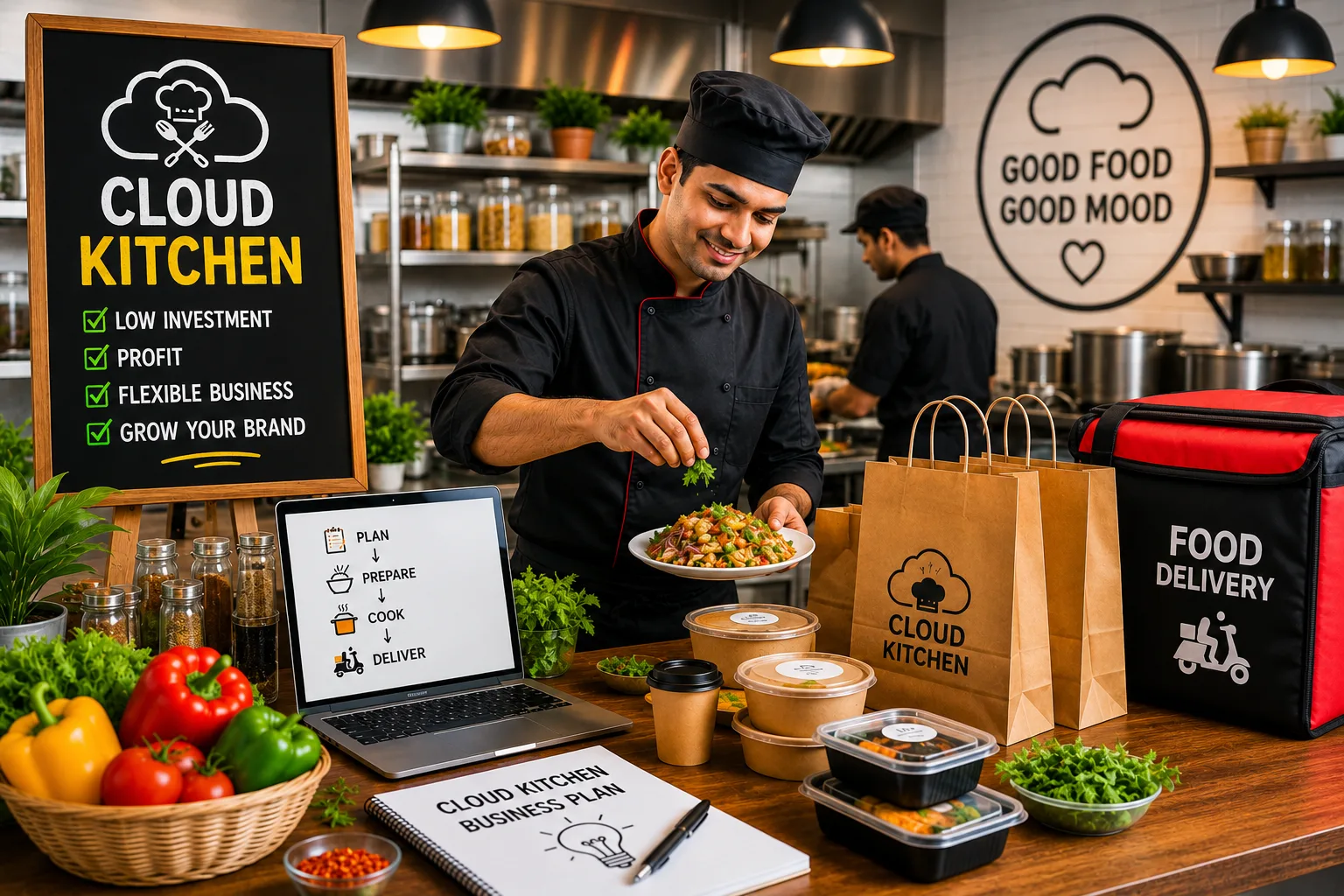
The way people order food has changed significantly over the last few years. Instead of visiting restaurants, many customers now prefer ordering meals through a food delivery app and having them delivered to their doorstep. This shift has created a great opportunity for entrepreneurs who want to enter the food business without investing heavily in a traditional restaurant.
A cloud kitchen business is one of the fastest-growing business models in India’s food industry. Since it focuses only on preparing food for online orders, it requires less space, fewer employees, and lower operational costs than a dine-in restaurant. Whether you’re an experienced chef, a restaurant owner looking to expand, or someone planning a food startup, a cloud kitchen offers a practical and scalable way to build your business.
However, success doesn’t come from simply renting a kitchen and listing your menu online. You need the right cloud kitchen business plan, a suitable location, proper licenses, efficient operations, reliable delivery partners, and an effective marketing strategy to attract and retain customers.
In this guide, you’ll learn everything you need to know about how to start a cloud kitchen business in India. We’ll cover different business models, legal requirements, setup costs, equipment, marketing strategies, common challenges, and practical steps that can help you build a profitable and sustainable business.
What Is a Cloud Kitchen?
A cloud kitchen is a commercial kitchen that prepares food exclusively for online orders. Unlike traditional restaurants, it does not have a dining area where customers can sit and eat. Instead, customers place their orders through food delivery apps, websites, or an online ordering system, and the food is delivered directly to their location.
This business model is also known by several other names, including:
- Virtual kitchen business
- Ghost kitchen business
- Dark kitchen business
- Delivery-only restaurant
Although the names differ slightly, the basic concept remains the same—preparing quality food for delivery without operating a physical restaurant.
The biggest advantage of a cloud kitchen is that it reduces many of the costs associated with a traditional restaurant business. There is no need to invest in expensive interiors, dining furniture, or front-of-house staff. Business owners can focus entirely on food quality, kitchen efficiency, and customer satisfaction.
Today, many businesses operate multiple food brands from a single kitchen.
For example, one kitchen may serve:
- Pizza
- Burgers
- Chinese cuisine
- Healthy meals
- Desserts
Each brand appears separately on food delivery platforms, allowing owners to reach different customer groups while using the same kitchen and staff. As online food ordering continues to grow across India, many entrepreneurs now choose to start a cloud kitchen instead of opening a conventional restaurant because it offers greater flexibility, lower risk, and better opportunities for expansion.
How Does a Cloud Kitchen Work?
A cloud kitchen follows a straightforward operating model focused entirely on preparing and delivering food efficiently.
Here’s how the process typically works:
Step 1: Customers Place Orders
Customers browse menus and place orders through popular food delivery apps, your own website, or another online ordering system. The order immediately reaches the kitchen through a connected management platform or Cloud kitchen POS system, allowing the kitchen staff to begin preparation without delay.
Step 2: Food Preparation Begins
Once the order is received, chefs prepare the meal according to standardized recipes. Good kitchen management is essential during this stage because timely preparation directly affects customer satisfaction and delivery performance.
Step 3: Food Packaging
After cooking, meals are packed using quality food packaging that helps maintain freshness, temperature, and presentation during transportation. Proper packaging also reduces the risk of spills and damaged orders, creating a better customer experience.
Step 4: Pickup by Delivery Partners
Once the order is ready, assigned delivery partners collect the package from the kitchen and deliver it to the customer. Fast coordination between the kitchen staff and delivery personnel helps reduce waiting time and improves overall service quality.
Step 5: Customer Receives the Order
The customer receives the food, enjoys the meal, and may leave a rating or review on the delivery platform. Positive reviews improve your restaurant’s visibility and help attract more customers over time.
Technology Plays a Key Role –
Modern cloud kitchens rely heavily on technology to manage daily operations. Many businesses use Cloud kitchen software to handle:
- Order management
- Inventory tracking
- Kitchen workflow
- Sales reporting
- Customer data
- Staff management
Using the right software makes cloud kitchen management much more organized and helps reduce manual errors as the business grows.
Why the Cloud Kitchen Business is Growing in India?
India’s online food industry has expanded rapidly over the past decade. Changing lifestyles, busy work schedules, and the increasing popularity of food delivery services have created favorable conditions for cloud kitchens.
Let’s look at the major reasons behind this growth.
1. Increasing Demand for Online Food Delivery
One of the biggest reasons behind the success of the online food delivery business is customer convenience. People today prefer ordering food from their homes, offices, or even while traveling. Instead of cooking after a long day, many choose to order meals with just a few taps on their smartphones. This growing demand has created excellent opportunities for entrepreneurs entering the cloud kitchen market.
Popular food categories include:
- Fast food
- Indian cuisine
- Healthy meals
- Desserts
- Regional specialties
- Breakfast items
Businesses that consistently deliver quality food on time often build a loyal customer base.
2. Lower Investment Compared to Traditional Restaurants
Opening a traditional restaurant usually requires a significant investment in:
- Interior design
- Furniture
- Dining space
- Wait staff
- Air conditioning
- Customer seating
- Parking facilities
A cloud kitchen removes most of these expenses. Since customers never visit the location, owners only need a well-equipped commercial kitchen that meets hygiene and food safety standards.
This lower cloud kitchen investment makes the business more accessible for startups and first-time entrepreneurs. Many successful businesses begin with a single kitchen before expanding into multiple locations.
3. Growing Use of Food Delivery Apps
Food delivery platforms have made it much easier for new businesses to reach customers without spending heavily on advertising. Instead of building a customer base from scratch, cloud kitchens can list their menu on popular delivery platforms and start receiving orders relatively quickly.
These platforms also provide useful features such as:
- Online payments
- Customer ratings
- Order tracking
- Promotional campaigns
- Delivery logistics
This allows business owners to focus more on food preparation and customer experience rather than managing an in-house delivery network.
4. High Scalability and Profit Potential
One of the biggest advantages of the cloud kitchen model is its ability to scale efficiently.
As demand grows, businesses can:
- Launch additional food brands
- Expand into new delivery areas
- Open multiple kitchen locations
- Add new cuisines
- Increase production capacity
Unlike traditional restaurants, expansion doesn’t always require opening another dine-in outlet.
With proper planning, efficient operations, controlled costs, and strong customer retention, a cloud kitchen can become a profitable long-term venture. While cloud kitchen profit depends on factors such as location, menu pricing, operational efficiency, and order volume, businesses that maintain consistent quality and manage expenses effectively are generally in a stronger position to improve their margins over time.
Types of Cloud Kitchen Business Models
Choosing the right cloud kitchen business model is one of the most important decisions before launching your business. The model you select affects your investment, daily operations, staffing, marketing, and future expansion. There isn’t a single model that works for everyone. Some are ideal for first-time entrepreneurs, while others suit established restaurant brands looking to grow online.
Let’s look at the most common options.
1. Independent Cloud Kitchen
An independent cloud kitchen operates under a single food brand from one kitchen. All orders are prepared from the same location and delivered through online platforms or the business’s own ordering channel. This model is often the best choice for entrepreneurs starting their first cloud kitchen startup because it is easier to manage and requires a relatively lower investment.
Advantages
- Easier to manage daily operations
- Lower setup and staffing costs
- Better quality control
- Simple inventory management
- Strong brand identity
Best for
- New entrepreneurs
- Small food businesses
- Homegrown food brands
- Single-cuisine restaurants
2. Multi-Brand Cloud Kitchen
In this model, one kitchen prepares food for multiple brands. Each brand focuses on a different cuisine or food category while sharing the same kitchen, staff, and equipment.
For example, one kitchen may operate:
- A burger brand
- A pizza brand
- A biryani brand
- A dessert brand
Customers see these as separate restaurants on food delivery platforms, even though the food is prepared in the same kitchen.
Advantages
- Better utilization of kitchen resources
- Higher revenue opportunities
- Shared operational costs
- Ability to target different customer groups
However, this model requires excellent cloud kitchen management because multiple menus and inventories must be handled simultaneously.
3. Virtual Restaurant
A virtual restaurant is an online-only food brand that operates from an existing kitchen. Instead of opening a new kitchen, restaurant owners create an additional brand using the same infrastructure.
For example, a restaurant serving North Indian food may launch a separate online-only burger or healthy meal brand. This approach helps businesses increase sales without making a large additional investment.
Advantages
- Lower expansion cost
- Better utilization of existing staff
- Faster market entry
- Opportunity to test new cuisines
4. Commissary or Shared Kitchen
A commissary kitchen is a large commercial kitchen rented by multiple food businesses. Instead of investing in an entire kitchen setup, entrepreneurs pay rent for the kitchen space they use. This model significantly reduces the initial cloud kitchen setup cost.
Advantages
- Lower initial investment
- Professional kitchen facilities
- Shared maintenance expenses
- Faster business launch
It is especially suitable for startups and small businesses that want to test the market before investing in their own kitchen.
5. Hybrid Cloud Kitchen Model
A hybrid model combines a traditional restaurant with online delivery services. Customers can dine at the restaurant while the kitchen also fulfills online orders. Many established restaurants adopt this model to increase revenue without opening additional outlets.
Advantages
- Multiple income sources
- Strong brand visibility
- Better kitchen utilization
- Higher sales potential
For businesses with an existing customer base, this model can be an effective way to expand into the growing online restaurant business.
Step-by-Step Guide to Start a Cloud Kitchen Business in India
Starting a cloud kitchen requires more than just cooking good food. Careful planning, legal compliance, efficient operations, and strong marketing all contribute to long-term success.
Here’s a practical step-by-step guide.
1. Conduct Market Research
Every successful food startup begins with understanding the market.
Research helps you identify:
- Popular cuisines in your city
- Customer preferences
- Average pricing
- Competitor strengths and weaknesses
- Delivery demand in different areas
You should also study customer reviews on food delivery platforms to understand what people appreciate and what they frequently complain about. This information helps you create a better business strategy.
2. Choose Your Cloud Kitchen Business Model
After researching the market, select the model that best matches your budget and business goals.
Ask yourself questions such as:
- Will you operate one brand or multiple brands?
- Will you rent a shared kitchen or build your own?
- Are you expanding an existing restaurant?
- How quickly do you plan to grow?
Choosing the right cloud kitchen business model early helps avoid unnecessary operational changes later.
3. Create a Business Plan
A detailed cloud kitchen business plan serves as the foundation of your business.
Your plan should include:
- Business goals
- Target customers
- Menu strategy
- Estimated investment
- Operating expenses
- Pricing strategy
- Marketing approach
- Revenue projections
- Break-even analysis
A well-prepared business plan is also useful if you plan to seek funding or business loans.
4. Register Your Business and Obtain Licenses
Before accepting orders, complete all required cloud kitchen registration and legal approvals.
Some of the important registrations include:
- FSSAI License
- GST Registration
- Trade License
- Shop and Establishment License
- Fire Safety approvals (where applicable)
Obtaining the necessary cloud kitchen license helps ensure your business operates legally and builds customer trust. We’ll discuss these licenses in detail later in this guide.
5. Choose the Right Location
Location plays a major role in delivery efficiency. Unlike traditional restaurants, your kitchen doesn’t need to be on a busy commercial street. Instead, focus on areas that offer:
- High online food demand
- Good road connectivity
- Easy access for delivery riders
- Affordable rent
- Reliable electricity and water supply
A central location can reduce delivery times and improve customer satisfaction.
6. Purchase Kitchen Equipment
Your kitchen should be equipped with everything needed to prepare food safely and efficiently.
A basic cloud kitchen equipment list may include:
- Cooking ranges
- Ovens
- Refrigerators
- Freezers
- Preparation tables
- Storage racks
- Exhaust systems
- Mixers and grinders
- Packaging counters
- Cleaning equipment
Buy durable kitchen equipment that matches your menu rather than purchasing unnecessary items. Proper planning helps control your cloud kitchen investment cost.
7. Hire Staff
Even a small cloud kitchen requires skilled employees.
Typical staff includes:
- Head chef
- Assistant chefs
- Kitchen helpers
- Cleaning staff
- Inventory manager (if required)
- Order management executive
As your business grows, you can expand your team based on order volume. Training staff in hygiene, food preparation, and customer service standards helps maintain consistent quality.
8. Create Your Menu and Pricing Strategy
Your menu should be simple, profitable, and easy to prepare consistently.
When developing your menu, consider:
- Ingredient availability
- Preparation time
- Packaging suitability
- Customer demand
- Profit margins
Avoid creating an unnecessarily large menu in the beginning. Many successful cloud kitchens start with a focused menu and gradually expand based on customer feedback. Good menu planning also reduces food waste and improves operational efficiency.
9. Partner With Food Delivery Platforms
Food delivery platforms help your business reach customers quickly.
While choosing platforms, compare factors such as:
- Commission charges
- Delivery coverage
- Customer base
- Marketing opportunities
- Technical support
You should also work toward building your own customer base through a website or mobile ordering system so that you aren’t completely dependent on third-party platforms.
10. Launch and Start Operations
Before your official launch, test every part of your operations.
Conduct trial orders to evaluate:
- Food quality
- Packaging
- Delivery timing
- Kitchen workflow
- Order accuracy
Collect feedback from friends, family, or a small group of customers and make improvements before promoting your business on a larger scale. Once everything is running smoothly, begin marketing your business and monitor customer feedback regularly.
Successful cloud kitchen operations rely on continuous improvement. Regularly review customer ratings, delivery performance, food quality, and operating costs to identify opportunities for growth.
Legal Licenses and Registrations Required for a Cloud Kitchen
Running a cloud kitchen business legally is just as important as serving quality food. Before you start accepting orders, you must complete the necessary registrations and obtain the required licenses. These approvals help ensure your business complies with government regulations and builds trust with customers and delivery platforms.
The exact requirements may vary slightly depending on your state or city, but the following licenses are commonly required in India.
1. FSSAI License
The FSSAI license for a cloud kitchen is one of the most important legal requirements for any food business in India. It is issued by the Food Safety and Standards Authority of India (FSSAI) and confirms that your kitchen follows food safety and hygiene standards.
The type of license you need depends on your annual turnover and the size of your business.
Why it’s important
- Legally allows you to sell food
- Builds customer confidence
- Required by most food delivery platforms
- Promotes proper food safety practices
Make sure your kitchen follows hygiene guidelines, stores ingredients correctly, and maintains cleanliness to comply with FSSAI standards.
2. GST Registration
If your business meets the applicable turnover threshold or falls under mandatory registration requirements, you will need GST registration.
Having GST registration allows you to:
- Collect GST from customers where applicable
- Claim input tax credits (subject to eligibility)
- Issue proper tax invoices
- Conduct business legally with vendors and partners
Consult a qualified tax professional to understand the GST rules applicable to your business.
3. Shop and Establishment License
Most states require businesses to register under the Shop and Establishment Act.
This registration generally covers:
- Business working hours
- Employee records
- Working conditions
- Basic labor law compliance
The application process and renewal requirements vary from state to state.
4. Fire Safety Certificate
A commercial kitchen uses cooking gas, electrical equipment, and heating appliances, making fire safety an important consideration. Depending on your kitchen size and local regulations, you may need a Fire Safety Certificate from the concerned authority.
Basic fire safety measures include:
- Fire extinguishers
- Emergency exits
- Safe gas pipeline installation
- Electrical safety checks
- Staff training for emergencies
Even if your local authority doesn’t require a certificate for your setup, following fire safety practices is always recommended.
5. Trade License
Many municipal corporations require a Trade License before businesses begin operations. This license confirms that your business is permitted to operate within the local jurisdiction.
Requirements vary depending on the city, so it’s best to check with your local municipal authority before launching your kitchen.
How Much Does It Cost to Start a Cloud Kitchen Business in India?
One of the biggest advantages of a cloud kitchen is its lower startup cost compared to a traditional restaurant. However, the total Cloud kitchen setup cost depends on several factors, including your location, kitchen size, menu, equipment, and business model.
Instead of looking at one fixed number, it’s better to understand where your investment goes.
1. Kitchen Setup Cost
Your cloud kitchen setup includes preparing the kitchen space so it is ready for daily operations.
Common setup expenses include:
- Kitchen interiors
- Plumbing work
- Electrical installation
- Ventilation and exhaust systems
- Storage areas
- Workstations
- Water supply arrangements
If you rent an existing commercial kitchen, your initial setup cost may be much lower than building a kitchen from scratch.
2. Equipment Cost
Your menu largely determines the cloud kitchen equipment you need.
Common equipment includes:
| Equipment | Purpose |
|---|---|
| Cooking range | Daily cooking |
| Oven | Baking and roasting |
| Refrigerator | Food storage |
| Deep freezer | Frozen ingredients |
| Exhaust system | Ventilation |
| Stainless steel tables | Food preparation |
| Storage racks | Ingredient organization |
| Mixers and grinders | Food preparation |
| Packaging station | Order packing |
Buying quality equipment can reduce maintenance costs and improve operational efficiency over time.
3. Licensing and Registration Cost
Budget for government registrations and professional assistance if required.
Typical expenses may include:
- FSSAI registration
- Trade License
- GST registration (if applicable)
- Shop and Establishment registration
- Professional consultation fees
The actual amount depends on your business structure and local regulations.
4. Technology and Software Cost
Technology is an essential part of modern cloud kitchen operations.
Useful software includes:
- Cloud kitchen POS system
- Order management software
- Inventory management tools
- Billing software
- Customer database
- Sales reporting tools
Many software providers offer subscription-based pricing, allowing startups to begin with affordable monthly plans and upgrade as the business grows.
5. Marketing Cost
Launching your kitchen is only the beginning. Customers first need to discover your brand.
Your marketing budget may include:
- Social media advertising
- Professional food photography
- Branding and logo design
- Promotional offers
- Website development
- Search engine optimization
- Local online advertising
Investing in cloud kitchen marketing from the beginning can help generate consistent orders.
6. Estimated Total Investment
The total Cloud kitchen investment cost varies based on the size and scale of your business.
Here’s a general estimate:
| Business Size | Estimated Investment |
|---|---|
| Small cloud kitchen | ₹3 lakh – ₹8 lakh |
| Medium-sized cloud kitchen | ₹8 lakh – ₹20 lakh |
| Multi-brand cloud kitchen | ₹20 lakh or more |
These figures are only general estimates. Your actual investment will depend on factors such as:
- City and rental costs
- Kitchen size
- Equipment quality
- Staffing requirements
- Technology choices
- Marketing budget
Is Cloud Kitchen Business Profitable?
One of the most common questions entrepreneurs ask is, “Is cloud kitchen business profitable?” The answer depends on how efficiently you manage your business.
A cloud kitchen generally has lower overhead costs than a traditional restaurant because there is no dining area to maintain. However, profitability is influenced by several factors, including:
- Food quality
- Menu pricing
- Ingredient costs
- Delivery commissions
- Customer retention
- Order volume
- Operational efficiency
Businesses that consistently deliver quality food, control expenses, and build a loyal customer base are typically in a better position to improve their cloud kitchen profit over time.
Marketing Strategies to Grow Your Cloud Kitchen Business
Launching your cloud kitchen is only the first step. Long-term success depends on how well you attract new customers and encourage them to order again. Since customers can’t see your kitchen or dine at your location, your online presence and service quality become your biggest strengths.
Here are some practical Cloud kitchen marketing strategy tips to help grow your business.
1. Optimize Your Listings on Food Delivery Apps
For many customers, the first interaction with your business happens through a food delivery app. A well-optimized listing can improve visibility and increase orders.
Focus on the following:
- Use high-quality food images.
- Write clear and appealing menu descriptions.
- Keep pricing accurate and competitive.
- Mention ingredients where appropriate.
- Update unavailable items regularly.
- Display your operating hours correctly.
Also, monitor your ratings and respond to customer feedback whenever possible. A higher rating often improves your visibility on delivery platforms.
2. Use Social Media Marketing
Social media is an affordable way to promote your online food delivery business and connect with local customers.
Share content that encourages people to try your food, such as:
- Newly launched dishes
- Behind-the-scenes kitchen videos
- Customer testimonials
- Limited-time offers
- Festival specials
- Short cooking clips
- User-generated content
Consistency is more important than posting every day. A few quality posts each week can help keep your brand visible.
3. Offer Discounts and Loyalty Programs
Customers appreciate good value, especially when trying a new food brand.
Some ideas include:
- First-order discounts
- Combo meal offers
- Free delivery during selected hours
- Referral rewards
- Loyalty points for repeat customers
- Special birthday offers
While discounts can attract new customers, avoid relying on heavy price reductions for the long term. Instead, focus on providing great food and service so customers return because they enjoy the experience.
4. Encourage Customer Reviews
Positive reviews build trust and influence purchasing decisions.
After every successful order, encourage customers to leave a review on the delivery platform.
You can also learn from negative reviews by identifying recurring issues such as:
- Late deliveries
- Incorrect orders
- Packaging problems
- Food temperature
- Taste consistency
Respond politely to customer concerns and make improvements where needed. This shows that you value customer feedback and are committed to providing a better experience.
5. Build Your Own Website and Ordering System
Although delivery platforms help you reach a wider audience, depending entirely on them isn’t always the best long-term strategy.
Having your own website with an online ordering system offers several benefits:
- Greater control over customer experience
- Direct customer communication
- Reduced dependence on third-party platforms
- Better brand recognition
- Access to valuable customer insights
As your business grows, direct orders can become an important source of repeat customers.
Common Challenges in Running a Cloud Kitchen and How to Overcome Them
Like any business, running a cloud kitchen comes with its own set of challenges. Understanding these issues in advance allows you to prepare effective solutions.
1. High Competition
The popularity of the cloud kitchen business has led to increased competition in many cities.
How to overcome it –
Instead of offering everything, focus on doing a few things exceptionally well.
You can stand out by:
- Serving a specific cuisine
- Maintaining consistent food quality
- Offering unique recipes
- Providing excellent customer service
- Delivering orders quickly
- Creating memorable packaging
A clear brand identity often makes a bigger impact than simply having a large menu.
2. Managing Food Quality
Customers expect every order to taste the same, regardless of when they place it. Maintaining consistency can become difficult as order volume increases.
How to overcome it –
Create standardized recipes for every dish.
Also:
- Train kitchen staff regularly.
- Use fresh ingredients.
- Monitor food preparation processes.
- Follow proper food safety practices.
- Conduct regular quality checks.
Consistency helps build customer trust and encourages repeat orders.
3. Delivery Delays
Even if your food is excellent, late deliveries can negatively affect customer satisfaction. Delays may occur due to traffic, high order volumes, or delivery partner availability.
How to overcome it –
Reduce delays by:
- Preparing orders efficiently.
- Organizing kitchen workflows.
- Using reliable delivery partners.
- Choosing a location close to your target customers.
- Updating customers if delays occur.
Good coordination between the kitchen and delivery teams can significantly improve the customer experience.
4. Customer Retention
Attracting first-time customers is important, but retaining them is even more valuable. Many customers try different restaurants regularly, making loyalty a challenge.
How to overcome it –
Focus on creating a positive overall experience by offering:
- Consistent food quality
- Fast delivery
- Attractive food packaging
- Fair pricing
- Friendly customer support
- Personalized offers for repeat customers
Satisfied customers are more likely to recommend your business to others.
5. Maintaining Profit Margins
Ingredient prices, packaging costs, delivery commissions, and promotional expenses can reduce profits if not managed carefully.
How to overcome it –
Monitor your business performance regularly by reviewing:
- Food costs
- Inventory usage
- Staff productivity
- Delivery expenses
- Marketing spending
- Menu profitability
Remove items with consistently low demand or poor profit margins and focus on dishes that perform well. Efficient inventory management and reducing food waste can also improve profitability over time.
Final Thoughts
Starting a cloud kitchen business in India can be an excellent opportunity for entrepreneurs who want to enter the growing online restaurant business with a lower investment than a traditional restaurant. As more customers choose to order food online, the demand for well-managed delivery-focused kitchens continues to increase.
However, building a successful cloud kitchen involves much more than preparing good food. It requires careful planning, choosing the right cloud kitchen business model, completing the necessary registrations, investing in the right equipment, maintaining high food quality, and delivering a great customer experience.
Success also depends on continuously improving your operations. Listening to customer feedback, updating your menu based on demand, managing costs effectively, and adopting smart marketing practices can help your business grow steadily over time.
If you’re wondering how to open a cloud kitchen, the key is to start with a clear plan, stay compliant with legal requirements, and focus on consistency from day one. A well-organized operation, supported by the right technology and a customer-first approach, can help you build a sustainable and profitable business in India’s expanding food delivery market.
Thank you for taking the time to read this blog.
I hope you found it helpful and that it gave you a clear understanding of how to start a cloud kitchen business in India. If you know someone who is planning to start a cloud kitchen or is exploring business ideas in the food industry, feel free to share this guide with them. It might help them avoid common mistakes and make more informed decisions as they begin their journey.
Thanks again for reading, and I wish you all the best with your business goals.