
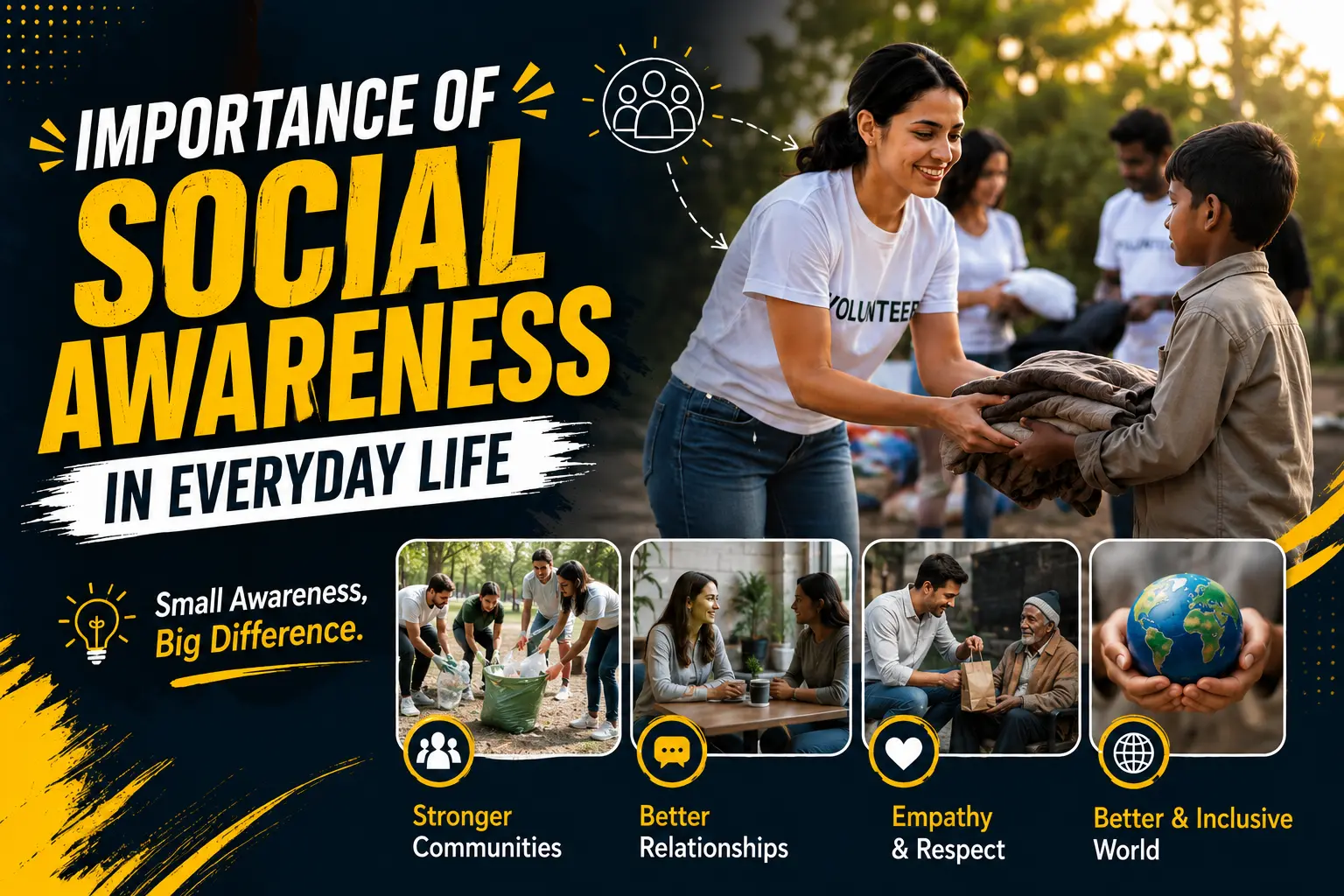
Have you ever said something and instantly realized it hurt someone — even though you didn’t mean it?
That moment of pause, that sudden awareness — that is social awareness in real life. Most of us go through our days without truly noticing the emotions and needs of people around us. We talk, but we don’t always listen. We look, but we don’t always see.
This guide will show you what social awareness really means, why it matters, and how you can build it — one small moment at a time.
What is Social Awareness?
Social awareness is the ability to recognize and understand the emotions, behaviors, perspectives, and needs of other people. It involves paying attention to social cues, understanding different viewpoints, and responding appropriately in various situations.
People with strong social awareness can often:
- Understand how others feel
- Notice non-verbal communication signals
- Adapt their behavior to different situations
- Show empathy and respect
- Build stronger personal and professional relationships
Social awareness is considered one of the core components of emotional intelligence because it helps people connect effectively with others and navigate social environments successfully.
Low Social Awareness vs High Social Awareness –
| Situation | Low Social Awareness | High Social Awareness |
|---|---|---|
| Friend seems upset | Ignores it, keeps talking | Pauses and asks, “Are you okay?” |
| Meeting at work | Talks over others | Listens, lets everyone speak |
| Argument with family | Reacts immediately | Takes a breath, understands first |
| New person in the group | Doesn’t notice they’re quiet | Makes them feel included |
| Someone needs help | Waits to be asked | Offers help without being asked |
Importance of Social Awareness in Everyday Life
The importance of social awareness becomes clear in daily interactions. It helps individuals understand their surroundings, communicate effectively, and maintain positive relationships.
➤ Helps You Understand Other People’s Perspectives
Every person has a different story, different experiences, and a different way of looking at life. What seems simple to you may be difficult for someone else. Social awareness helps you understand that people think and feel differently. Instead of judging quickly, you try to understand where they are coming from. This makes it easier to connect with others and build better relationships.
➤ Improves communication and daily interactions
Good communication is not only about speaking. It is also about paying attention to how people feel. Sometimes a person’s expression, tone, or body language says more than their words. When you notice these things, conversations become more natural and meaningful. You understand people better and respond in a way that makes them feel heard and respected.
➤ Supports better decision-making
The decisions we make often affect other people around us. Social awareness helps you think about those effects before taking action. You begin to consider how your words or choices might impact someone else. This can help you make fairer and more thoughtful decisions that take other people’s feelings and situations into account.
➤ Reduces misunderstandings and conflicts
Many misunderstandings happen because people do not fully understand each other. Sometimes we assume what someone means without really listening. Social awareness encourages you to listen carefully and try to understand the other person’s point of view. When people feel heard and understood, small issues are less likely to turn into bigger problems, and conversations become much more positive.
Common Challenges to Social Awareness
Although social awareness is important, several factors can make it difficult to develop and maintain.
1. Personal biases and assumptions
People naturally develop beliefs based on their experiences. However, assumptions can sometimes prevent objective understanding.
Common issues include:
- Stereotyping
- Confirmation bias
- Judging without complete information
Recognizing personal biases is the first step toward improving awareness.
2. Lack of active listening
Many people listen only to respond rather than to understand.
Poor listening can result in:
- Miscommunication
- Missed information
- Weaker relationships
- Unnecessary conflicts
Active listening helps people better understand others’ needs and perspectives.
3. Cultural and communication differences
Different cultures often have unique communication styles, values, and social norms.
Without awareness, misunderstandings may occur due to:
- Language barriers
- Different social expectations
- Non-verbal communication differences
Learning about diverse cultures helps improve social understanding.
4. Digital distractions and reduced face-to-face interaction
Technology offers many benefits, but excessive screen time can reduce opportunities for meaningful social interaction.
Potential effects include:
- Reduced attention during conversations
- Missed emotional cues
- Weaker interpersonal skills
Balancing online and offline communication can help strengthen social awareness.
5. Stress and emotional distractions
Stress often narrows attention and makes it harder to notice other people’s emotions or needs.
When overwhelmed, people may:
- Become less patient
- Misread social cues
- React impulsively
- Focus only on personal concerns
Managing stress can improve awareness and social interactions.
Practical Ways to Improve Social Awareness
Developing social awareness is an ongoing process that can be strengthened through daily practice.
➤ Practice active listening
Active listening means giving your full attention to the speaker.
To improve active listening:
- Maintain eye contact.
- Avoid interrupting.
- Ask thoughtful questions.
- Reflect on what was said before responding.
This helps create more meaningful conversations.
➤ Pay attention to non-verbal cues
Body language often communicates emotions that words do not express.
Observe:
- Facial expressions
- Tone of voice
- Posture
- Gestures
These signals can provide valuable insight into how someone feels.
➤ Seek different perspectives
Make an effort to understand viewpoints that differ from your own.
You can do this by:
- Reading diverse opinions
- Having open conversations
- Asking respectful questions
- Learning from different experiences
This broadens understanding and reduces bias.
➤ Develop empathy through everyday interactions
Empathy grows through practice.
Simple ways to build empathy include:
- Showing genuine interest in others
- Offering support when needed
- Considering how someone else might feel
- Practicing kindness in daily interactions
Small actions often have a significant impact.
➤ Engage with diverse communities
Community awareness grows when people interact with individuals from different backgrounds.
Consider:
- Volunteering
- Attending community events
- Joining local organizations
- Participating in cultural activities
These experiences expand social understanding and strengthen community connections.
➤ Reflect on your own behavior and responses
Self-reflection helps identify areas for improvement.
Ask yourself:
- Did I listen carefully?
- Was I respectful?
- Did I understand the other person’s perspective?
- How could I respond better next time?
Regular reflection supports long-term personal growth.
Real-Life Examples of Social Awareness
A while ago, I was traveling to the office by bus, just like I did every day. The bus was very crowded, and I couldn’t find a seat. Even so, a stranger shared his seat with me, and I sat down. At the next stop, an elderly man got on the bus. I noticed that he was having difficulty standing and keeping his balance. Because of the sudden movements of the bus, he kept trying to steady himself.
Seeing this, I felt that standing for a long time would not be easy for his health. So I immediately got up from my seat and offered it to him. He smiled and thanked me, and I could clearly see the relief on his face.
I didn’t do this because of any rule or obligation. I simply understood his situation and felt that he needed the seat more than I did at that moment. That small action not only helped him, but it also encouraged some of the other passengers around us to pay more attention to the needs of others.
This is a simple but meaningful example of social awareness from my own experience. When we understand the situations and needs of the people around us and help them, we contribute to building a more caring and supportive society.
How Social Awareness Creates a Better Society
The impact of social awareness extends beyond individuals and benefits entire communities.
♦ Encourages respect for diversity
People come from different backgrounds, grow up in different environments, and have different beliefs and experiences. Social awareness helps us understand that not everyone thinks or lives the same way. Instead of judging people for being different, we learn to respect them. When people respect each other, communities become friendlier and more welcoming places to live.
♦ Strengthens community relationships
A community becomes stronger when people care about one another. Social awareness helps people notice when someone needs support and encourages them to lend a helping hand. Simple acts of kindness and understanding can bring people closer together. Over time, this creates stronger bonds, better trust, and a greater sense of belonging among community members.
♦ Reduces social conflicts and prejudice
Many disagreements happen because people make assumptions without knowing the full story. Social awareness encourages people to listen first and understand different points of view. When people take the time to understand each other, there is less misunderstanding, less judgment, and fewer conflicts. This helps create a more peaceful and respectful environment for everyone.
♦ Promotes cooperation and collective growth
Many problems in society can only be solved when people work together. Social awareness helps people see that they are part of a larger community and that everyone can contribute in some way. When people support each other and work toward common goals, positive changes happen more easily, and the whole community benefits.
♦ Encourages responsible citizenship
Social awareness helps people understand that their actions can affect others. Because of this, they are more likely to think carefully about their choices and act responsibly. They take part in community activities, help when needed, and show respect for the people around them. These small actions may seem simple, but they help make society a better place for everyone.
Conclusion
Social awareness is not something you either have or don’t have. It’s something that grows little by little through everyday experiences and simple interactions with people around you.
The next time someone suddenly becomes quiet during a conversation, take a moment to notice it. If a coworker seems stressed or worried, check in with them and see how they’re doing. Small actions like these may not seem important at the time, but they can make a real difference over time.
They help you build stronger relationships, understand people better, and see situations from a different perspective. Social awareness doesn’t develop overnight. It starts with paying attention, being present, and showing genuine care for the people around you. That’s where it begins.